The Undeserved Mercy of Grace: Why You Can’t Earn What Matters Most
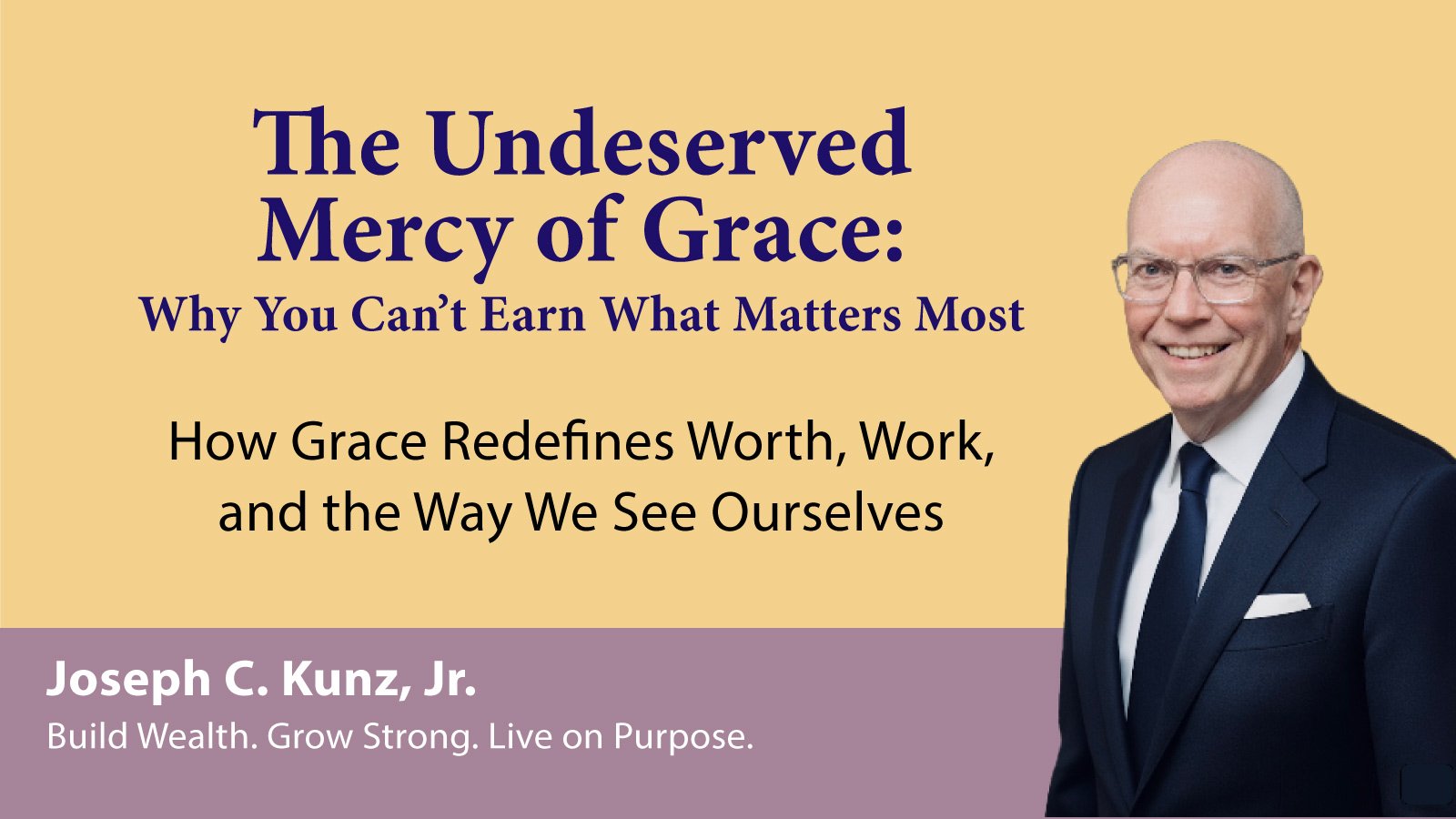
Grace is the one thing in life that can’t be earned, controlled, or deserved—and that’s what makes it so powerful; it frees us from the tyranny of performance and teaches us to receive what love, not labor, provides. —Joseph C. Kunz, Jr.
How Grace Redefines Worth, Work, and the Way We See Ourselves
By Joseph C. Kunz, Jr.
Synopsis
We live in an earned world—performance, exchange, and “prove yourself” logic baked into everything from careers to relationships. In this essay, Joseph C. Kunz, Jr. argues that grace is powerful precisely because it cannot be earned, managed, or deserved. It operates on a different economy: not wages for effort, but mercy given freely—love without invoices. And that truth isn’t an insult to our worth; it’s a rescue from the tyranny of performance.
Kunz clarifies the moral equation—justice gives what’s earned, mercy withholds what’s deserved, and grace gives what could never be earned—and shows why high-achievers resist grace most: it threatens control. He explores how grace becomes real in collapse, how it restores what logic would leave in ruins, and how it redefines work and worth for the builder: stewardship instead of pride, gratitude instead of anxiety, strength without self-salvation. Because grace doesn’t arrive when we’ve earned it—it arrives when we finally admit we need it.
Grace doesn’t show up because we’ve earned it—it shows up because we need it. —JCK
I. Introduction: The Problem with Earning Everything
We live in an earned world. Every promotion, every like, every compliment seems tied to performance. Even religion sometimes turns into a points system: Do enough good things, say the right prayers, and maybe you’ll earn peace.
We measure ourselves by our output—by how much control we can maintain. The more we achieve, the more we fear losing it. We become prisoners of our own performance.
That’s why undeserved sounds offensive. It violates the modern creed of self-sufficiency. It whispers that maybe your worth isn’t measured in productivity or perfection. Maybe the best things in your life don’t depend on you at all.
II. Why “Undeserved” Is the Whole Point
Grace is undeserved by definition. If you could earn it, it would be a wage, not a gift.
When Scripture says, By grace you have been saved, not of works, so that no one may boast, it’s not diminishing human effort—it’s protecting human humility. Grace keeps success from turning into pride and failure into despair.
Undeserved doesn’t mean unworthy; it means un-transactional. It’s love without invoices. It’s the gift that asks for nothing but gratitude.
Think about it: The most meaningful moments of your life—the person who forgave you when you didn’t deserve it, the friend who showed up when you couldn’t reciprocate, the peace that came in the middle of chaos—none of them were earned. They were given.
That’s what grace does: it breaks the logic of control and replaces it with the miracle of mercy.
One of my closest friends once lost everything in a failed business partnership. He was certain his reputation—and his faith—were gone for good. Months later, one of the very people he thought he had disappointed reached out, not to scold him, but to invite him to dinner. No lecture. No conditions. Just fellowship. He told me later that moment changed everything. I didn’t need advice, he said. I needed grace. That dinner didn’t fix his finances, but it restored his soul.
That’s the power of undeserved mercy—it rebuilds what logic would have left in ruins.
III. Justice, Mercy, and Grace: The Moral Equation
We often confuse them:
• Justice gives you what you’ve earned.
• Mercy withholds what you deserve.
• Grace gives you blessings you could never earn in the first place.
Justice is law. Mercy is compassion. Grace is love with no strings attached.
Justice can change behavior; grace changes the heart.
Justice orders society; grace heals the soul.
Grace turns religion into relationship, obligation into gratitude, and failure into a new beginning.
It’s the moral bridge between the world we build with our hands, and the one God rebuilds in our hearts.
IV. Why We Resist Grace
If grace is so beautiful, why do we fight it? Because it threatens our illusion of control.
We want to be the architects of our own redemption. We prefer effort to surrender because effort feels safer—it keeps us in charge.
Grace demands honesty: the admission that no matter how disciplined, successful, or strong we are, we still need something we can’t manufacture.
We don’t resist grace because we doubt it exists; we resist it because we don’t want to need it.
This resistance runs deepest in high achievers. The same drive that builds careers can build walls around the heart. We start believing we can manage grace like a project—earn forgiveness, plan transformation, or time redemption. But grace doesn’t work on our schedule. It refuses to be optimized.
That’s why grace often arrives disguised as loss. When the structures of control collapse—health, wealth, reputation—that’s when grace finally has room to move.
V. When Grace Becomes Real
Grace becomes real the moment theory meets collapse.
For me, it happened in a hospital bed, staring at machines that didn’t care about plans or performance. I couldn’t talk my way out, work my way out, or control my way out. The only thing left was faith—and the mercy that came with it.
But grace also lives in the small moments:
The nurse who adjusts a pillow without being asked.
The friend who says, “You don’t have to be strong today.”
The spouse who sits beside you, silent but steady.
Those aren’t acts of obligation—they’re glimpses of undeserved mercy in human form.
Grace rebuilds what control cannot: marriages, friendships, courage, peace. It turns fear into perspective and failure into fuel.
VI. What “Undeserved” Teaches the Builder
For the builder, undeserved isn’t weakness—it’s revelation.
You can design the perfect system, but you can’t control the soil beneath it. You can plan the project, but you can’t command the weather. You can prepare the team, but you can’t predict the market.
Grace fills the gap between what you can do and what must be done for you.
Every builder works on borrowed land. The ground beneath your project isn’t really yours—it’s loaned to you for a while. That’s how life works, too. Grace reminds you that every good thing—your skills, your family, your next breath—is borrowed. You don’t own it; you steward it. That understanding doesn’t weaken your work—it sanctifies it.
It reminds you that while your plans matter, your pride doesn’t. It humbles the achiever without humiliating the effort. It teaches you to work hard, then rest deeply—because grace holds what you can’t.
Grace doesn’t erase responsibility; it redeems it. It transforms ambition from self-promotion into stewardship.
VII. The Freedom Grace Brings
The beauty of grace is that it sets you free from the exhausting chase to deserve everything.
You stop trying to earn love and start reflecting it. You stop performing for approval and start producing from peace. You stop judging others by their failures because you remember how often you’ve been forgiven for yours.
Grace doesn’t make life easier—it makes it possible. It turns every day into a second chance, every failure into a lesson, and every success into gratitude.
The moment you stop asking, Have I earned this? and start asking, What will I do with this gift?—that’s when grace has done its work.
VIII. Conclusion: The Power You Can’t Earn
We spend our lives trying to earn what can only be received.
Grace is God’s gentle interruption of that madness. It’s His reminder that you’re loved not for your performance, but for your presence. That’s why it’s undeserved—because it’s unconditional.
The longer you live, the more you realize: control fails, effort falters, and even faith wavers—but grace keeps showing up anyway.
Grace is the final word over every failure, the calm beneath every storm, and the quiet proof that love is stronger than logic. You can’t earn it, but you can live like someone who’s received it.
Grace doesn’t erase who you’ve been—it reveals who you were meant to become. —JCK
Related Essays: For the Builder Ready to Go Deeper
If this essay spoke to you, these will deepen the foundation:
1. The Illusion of Control: Why Modern Success Still Feels Empty
When self-reliance collapses, faith and grace rebuild what control never could.
Reader Comment: I read this twice. It reminded me that letting go isn’t weakness—it’s wisdom.
2. Grace and Compound Interest: The Real Secret Behind Every Great Investor and Builder
How patience, gratitude, and humility multiply your success more powerfully than any market return.
Reader Comment: This one changed how I see patience—not as waiting, but as quiet power.
Related Book: Stop Earning What’s Already Been Given
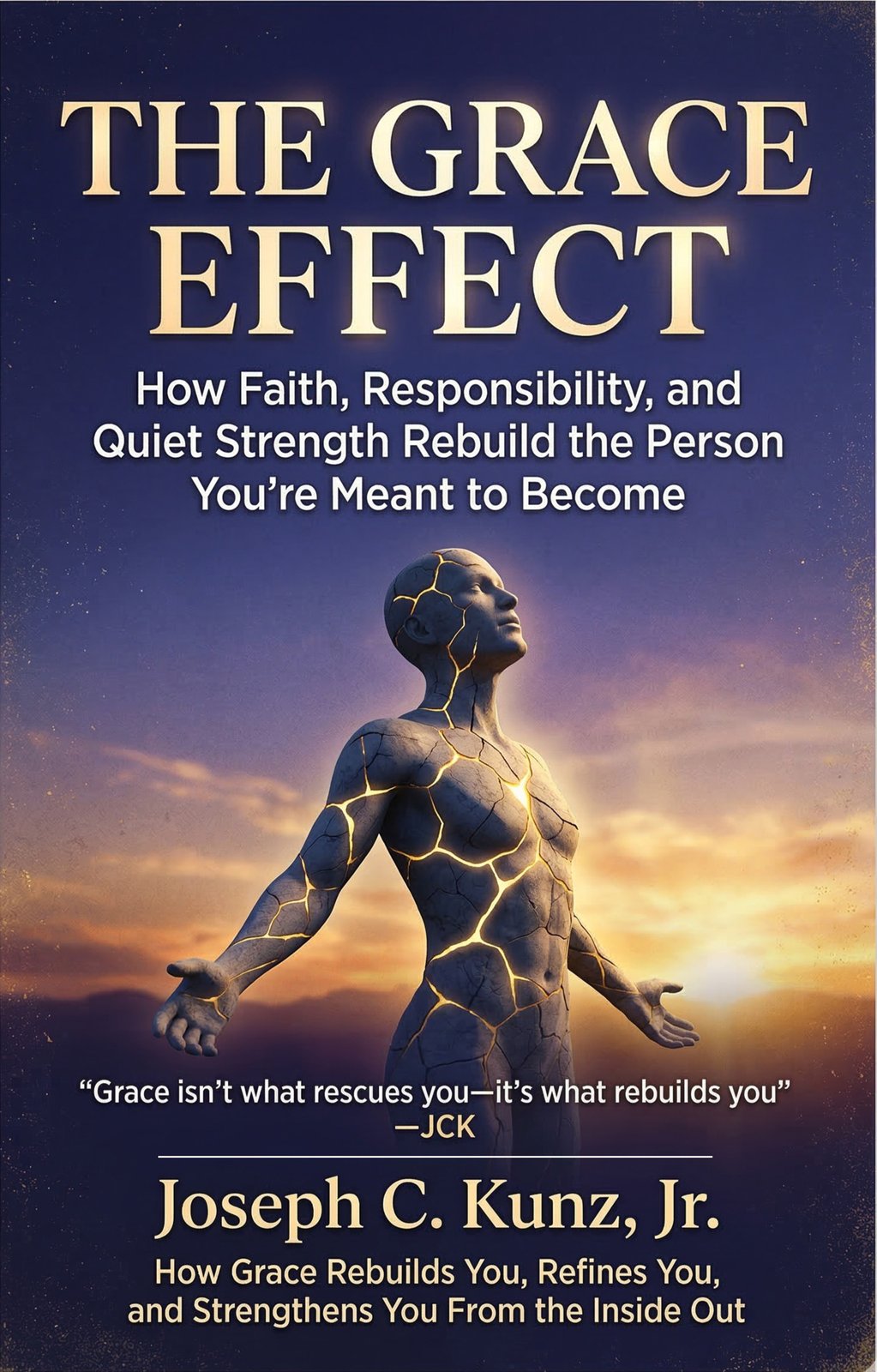
You’ve been running on overdrive—trying to prove you’re strong enough, smart enough, good enough. But grace doesn’t need your résumé. It needs your honesty.
The truth is, the life you’ve been chasing isn’t waiting for more effort—it’s waiting for surrender. You’ve done the hard part already—surviving. Now it’s time to start living. When you finally stop auditioning for approval, that’s when freedom walks in.
Grace isn’t weakness—it’s the moment you trade exhaustion for peace, pride for purpose, and control for clarity.
If you’re tired of trying to earn what’s already been given, it’s time to read the book that shows you how to live it.
Because grace isn’t a concept. It’s a power that rebuilds your life from the inside out—quietly, completely, and forever.
Coming soon.