Grace and Compound Interest: The Real Secret Behind Every Great Investor and Builder
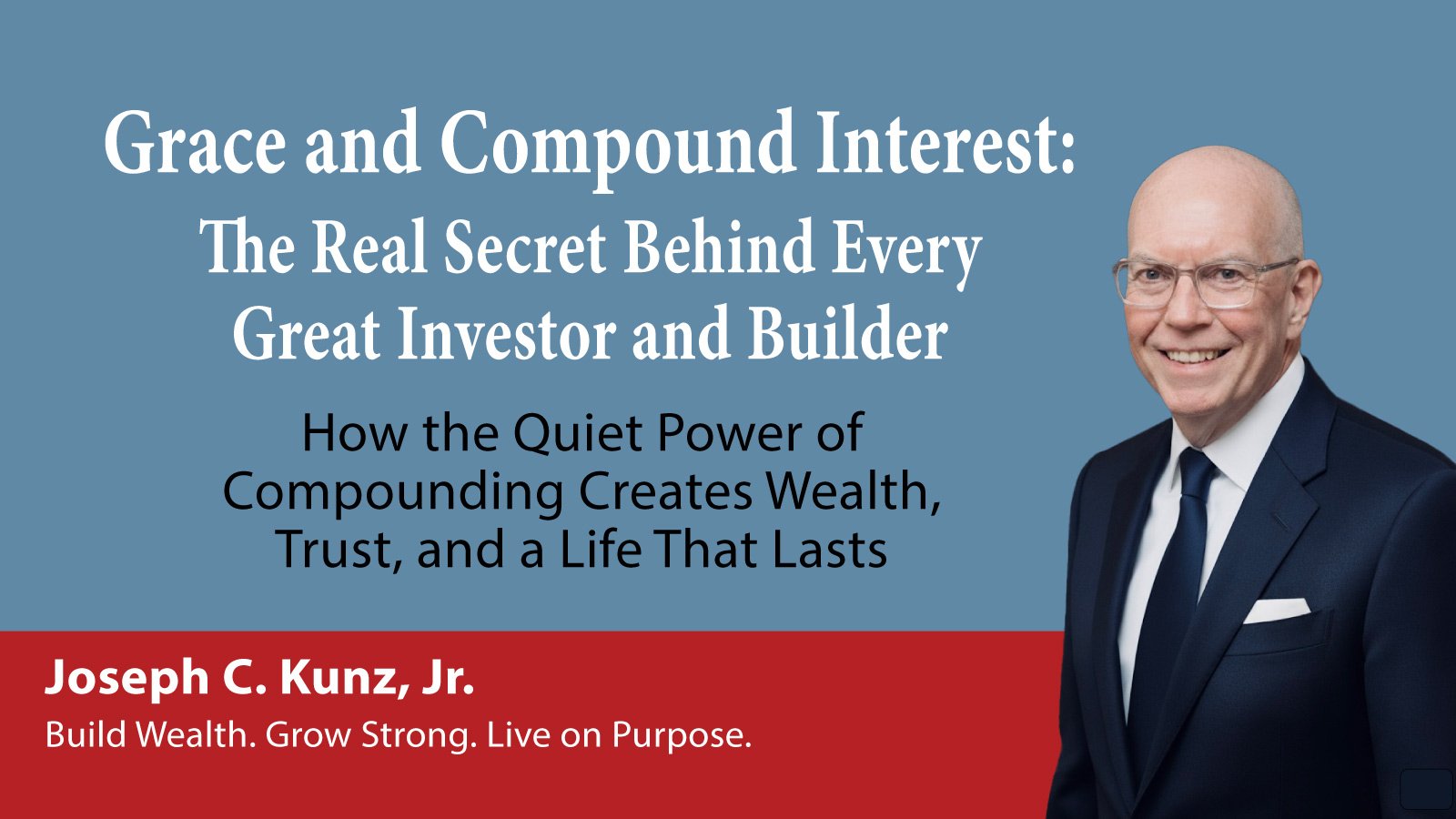
The same law that grows your money also grows your business and your soul—if you have the grace and discipline not to interrupt it. —Joseph C. Kunz, Jr.
How the Quiet Power of Compounding Creates Wealth, Trust, and a Life That Lasts
By Joseph C. Kunz, Jr.
Synopsis
Most people treat compounding like a finance trick—something that happens in a brokerage account. In this essay, Joseph C. Kunz, Jr. argues compounding is a law of reality: the same quiet force that multiplies money also multiplies skill, trust, reputation, and spiritual maturity. What looks boring up close—small deposits, steady routines, hard conversations, apologies, promises kept—becomes extraordinary over time if you stop interrupting the process.
Kunz connects three arenas where builders win by patience: investing (capital compounds when you don’t meddle), business (trust compounds when you don’t betray), and character (grace compounds when you practice restraint, humility, and forgiveness instead of self-justification). He exposes the true enemy of compounding—ego in a hurry—and names the deeper truth: compounding doesn’t just reward discipline. It rewards the ability to keep showing up when nothing is happening yet.
Everything worth having in life compounds—capital, trust, and grace—if you’re disciplined enough not to interrupt it. —JCK
I. Introduction: Where the Magic Actually Hides
People think compounding is a math trick. Punch a few numbers into a calculator, watch the line curve up, slap a rocket emoji on it, and call it a day. Cute.
But compounding is bigger than math. It’s a law of reality. It’s how money grows, yes—but it’s also how reputations harden, how systems smooth out, how skill stacks, how marriages deepen, and how grace becomes your default instead of your last resort.
Here’s the part that humbles you: compounding is invisible while it’s happening. In the beginning, it barely moves. It feels like nothing. That’s why most people quit.
Compounding demands a rare virtue: the ability to live through long stretches of “no evidence” without changing the plan. That’s not optimism. That’s not blind faith. That’s discipline with a long horizon.
And here’s the uncomfortable truth: compounding isn’t fragile because markets are scary or people are difficult. It’s fragile because you are impatient. You interrupt it. You tinker. You react. You insist on immediate proof. You demand fireworks to justify consistency.
Compounding looks boring up close because it’s built out of small choices: small deposits, dull routines, awkward apologies, honest conversations, promises kept when nobody’s watching.
The “magic” is time doing what time does… if you can get out of your own way long enough to let it.
Compounding is how creation works. Seeds don’t become trees overnight. Strength doesn’t arrive in one workout. Trust isn’t earned in a single speech. And faith isn’t built in a single crisis—it’s built in the thousand quiet choices that say ‘I will do what’s right even when it’s slow.’ That’s why shortcuts don’t just fail financially—they fail spiritually. They train your soul to demand outcomes without obedience.
II. Compounding as Stewardship: Letting Time Work
Investing taught me this first—not because I’m smarter than anyone else, but because I learned what the market punishes.
The market doesn’t punish ignorance as much as it punishes behavior. It punishes panic. It punishes ego. It punishes the itch to “do something” just to feel in control.
Most investors don’t lose to inflation. They lose to themselves.
A. The Builder’s Edge Is Boredom Tolerance
Compounding requires you to endure a brutal psychological season: the season where your discipline has started… but your results haven’t.
That’s where the amateurs start day-trading their future. That’s where they chase “the next thing.” That’s where they confuse activity with progress.
Builders don’t do that. Builders respect time. They understand that time is not just a factor—it’s the force.
B. The Real Enemy Is the “Behavior Tax”
Compounding is simple. What ruins it is what I call the behavior tax:
1. selling when you’re scared
2. buying when everyone’s euphoric
3. tinkering when you’re bored
4. overreacting to headlines that will be forgotten in three weeks
It’s not just that you miss gains. You break the chain. You reset the process. You turn a compounding machine into a series of disconnected guesses.
Patience isn’t passive. It’s disciplined refusal. It’s grace under volatility.
C. Compounding Loves Simplicity
Compounding thrives when you remove friction: unnecessary fees, unnecessary trades, unnecessary complexity, unnecessary ego.
People want sophisticated strategies. Builders want durable outcomes.
The goal isn’t to look smart. The goal is to stay in the game long enough for time to do what it does best: multiply.
And if you can’t stay faithful in a brokerage account, you won’t stay faithful when life gets harder than a red week in the market.
III. Compounding in Business: The Reputation Dividend
Business proved the same law, but the numbers were harder to see because the “account” isn’t money. It’s people.
And people keep score.
A. Trust Is the Highest-Yield Asset on Earth
Trust is leverage you don’t need to borrow. It reduces friction, accelerates decisions, shortens negotiation, and buys you forgiveness when things go wrong.
Most businesses don’t fail because their product is bad. They fail because their relationships are expensive—full of suspicion, inconsistency, corner-cutting, and quiet resentment.
Trust makes everything cheaper. And when things are cheaper, growth becomes easier.
B. Reputation Compounds—or It Accrues Interest Against You
Reputation is either an asset or a liability. There’s no neutral.
If you consistently deliver, you don’t just build a track record—you build a default assumption in other people’s minds:
He’ll handle it. She’ll do the right thing. They don’t play games.
That assumption compounds into referrals, second chances, better partnerships, better hires, and better terms.
But the reverse is also true. Betrayal compounds too. Not just the big betrayals—the small ones: missed callbacks, fuzzy promises, lazy work, vague pricing, convenient excuses.
You don’t lose trust all at once. You lose it like a slow leak. Then one day you look up and wonder why business feels harder than it should.
C. Builders Don’t Chase Growth — They Chase Reliability
Flashy growth is often just borrowed momentum.
A builder’s business grows on something rarer: follow-through. Show up. Deliver. Fix what breaks. Tell the truth. Pay people fairly. Keep your word when it costs you.
Business is compound interest on promises kept.
Which means every “small” choice—truth, fairness, restraint—either builds your name… or quietly mortgages it.
IV. Compounding in Grace: The Hidden Return on Character
Now we get to the deepest layer.
Because without grace, compounding can turn into greed. Without humility, wealth becomes arrogance. Without restraint, success becomes entitlement.
Grace is what keeps the whole machine from rotting from the inside out.
A. Grace Is the Ability to Stay Clean Under Pressure
Grace looks weak in the moment: biting your tongue, owning your mistake, forgiving when you could score points, refusing to humiliate someone who deserves it.
But repeated daily, grace shapes your temperament. Temperament shapes decisions. Decisions shape outcomes.
That’s compounding.
You don’t practice grace so people think you’re “nice.” You practice grace so you become the kind of person who doesn’t blow up the very relationships your future depends on.
B. Bitterness Is Negative Compounding
Here’s a truth most people avoid: the opposite of grace compounds too.
Bitterness compounds into suspicion. Suspicion compounds into isolation. Isolation compounds into hardened pride. And pride compounds into self-destruction disguised as “principle.”
A lot of people don’t lose their future through one catastrophic mistake. They lose it through years of rehearsed resentment.
Grace isn’t softness. It’s strength under control.
C. Humility Protects the Machine
Humility is what keeps you teachable. It keeps you honest. It keeps you from rewriting history to protect your ego.
And that’s the hidden miracle: humility keeps compounding alive because it prevents the most common interruption of all—
self-justification.
Self-justification is where you stop learning. Stop apologizing. Stop improving. Stop listening. Stop correcting the small things before they become big things.
Grace compounds through restraint, humility, and forgiveness. It’s the quiet dividend of character—the kind that doesn’t show up on your balance sheet but determines every other line on it.
V. Conclusion: The Builder’s Law of Compounding
The pattern is the same in all three arenas:
1. Investing: Capital compounds if you don’t interrupt it.
2. Business: Trust compounds if you don’t betray it.
3. Character: Grace compounds if you don’t excuse yourself out of it.
And the enemy is always the same:
ego in a hurry.
Ego wants credit now. Results now. Vindication now. Compounding needs time, humility, and a long horizon. It needs you to be okay with being underestimated today so you can’t be ignored tomorrow.
That’s the real secret behind every great investor and every enduring builder: they respect time. They stay humble before the process. They understand that grace—whether it’s patience with the market, patience with people, or patience with themselves—is what keeps the machine running.
So yes, the math of compounding is powerful. But the mindset behind it is spiritual: obedience in the dark. It’s doing what’s right when you can’t prove it’s working yet—and refusing to trade tomorrow’s harvest for today’s relief.
Money compounds through discipline. Business compounds through integrity. Grace compounds through humility.
When all three are working together, you don’t just grow rich—you grow steady. You build something that lasts.
Compounding is the reward for grace, discipline, and patience—three habits that never make headlines but always make history. —JCK
Related Essays: For the Ambitious Individual Ready to Go Deeper
If this essay hit a nerve, these two will drive it even deeper.
1. Why Rich People Think in Terms of Systems, Not Paychecks
Learn how the wealthy escape the time-for-money trap by building income-producing machines that run while they sleep.
Reader Comment: After reading this, I stopped chasing side hustles and started building a system that earns even when I don’t. Game-changer.
2. Faith in the Marketplace: Why Belief Belongs in Business
Discover how Christian principles sharpen your judgment, steady your emotions, and turn profit into purpose instead of pride.
Quote: Faith isn’t weakness—it’s the compass that keeps your ambition pointed in the right direction. —JCK
Related Book: Stop Apologizing for Wanting to Win.
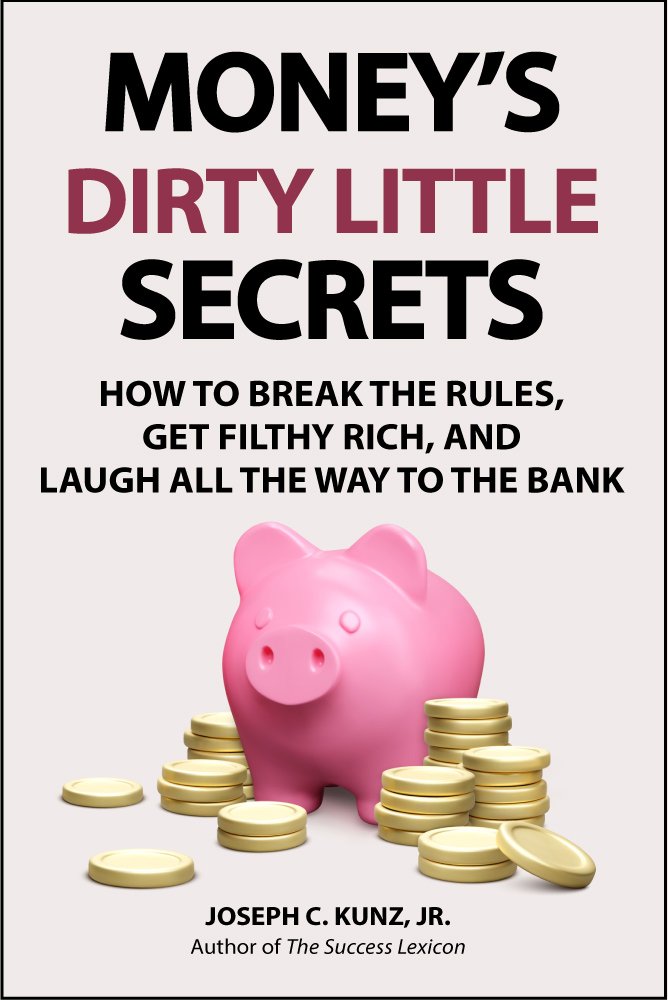
Start Compounding Like You Mean It.
When grace meets grit, your life stops drifting and starts compounding—money, trust, reputation, all stacking in your favor.
If this essay lit a fire in your chest, good. Now cash it in.
Money’s Dirty Little Secrets is the straight-shot playbook for builders who are done with excuses, allergic to hype, and ready to make discipline pay—at home, at work, and in the bank.
Inside, You’ll Learn How To:
• Build cash flow that doesn’t flinch.
• Turn integrity into unfair advantage.
• Use grace to keep your edge sharp (not soft).
• Stop interrupting your future with today’s ego.
Compounding favors the steady, not the flashy. Be the former. —JCK
Do the bold, loving thing for your future family: Kick the Door In—Get Money’s Dirty Little Secrets.
Read it tonight. Move money tomorrow. Show up again the day after. That’s how the magic multiplies.