The Illusion of Control: Why Modern Success Still Feels Empty
We’ve built a culture that worships control, mistaking self-reliance for wisdom—but real power begins when we surrender to faith and grace, the only forces that can turn chaos into peace and ambition into purpose. —Joseph C. Kunz, Jr.
How Faith and Grace Free Us from the Tyranny of Self-Reliance
By Joseph C. Kunz, Jr.
Synopsis
Modern life turns mastery into a religion: be productive, stay optimized, control outcomes, and you’ll be “safe.” In this essay, Joseph C. Kunz, Jr. argues that the obsession with control is why so many successful people still feel anxious and empty. When worth is measured by output and stability depends on perfect management, life becomes a fragile performance—one diagnosis, one loss, one disruption away from collapse.
Kunz shows why control can organize a life but can’t sustain a soul. He explores the hidden costs of self-reliance-as-identity—emotional bankruptcy, moral drift, and spiritual starvation—and he offers the antidote: faith and grace. Not as clichés, but as the only forces strong enough to steady a person when the illusion breaks.
Control gives you the illusion of safety—but grace gives you the strength to stand when safety is gone. —JCK
I. Introduction: The Modern Religion of Control
Walk through an airport, a boardroom, or a university lecture hall, and you’ll hear the same sermon: Control everything, fear nothing. It’s preached in quarterly reports, business schools, and podcasts that promise to “optimize” your life. Success, they tell us, is just another system waiting to be mastered.
I understand the appeal. I spent decades believing that if I worked harder, organized better, and anticipated every variable, life would finally stay within my grasp. But control is a fragile god—it blesses you with a sense of power, then betrays you the moment life changes the rules.
We’ve turned control into a sacrament. We schedule intimacy, outsource patience, and replace prayer with productivity apps. We “streamline” family time and “gamify” kindness. Every corner of modern life hums with the same anxious question: What haven’t I optimized yet?
But beneath all that precision lives quiet panic—the fear that one mistake, one diagnosis, one market crash will expose how fragile all that control really is.
The modern mind believes control equals competence. It rewards noise over wisdom, analytics over intuition, and confidence over humility. That’s why so many brilliant people go to bed with success and wake up with anxiety.
Control promises freedom but delivers exhaustion. It’s a god that takes everything and blesses nothing.
II. When Life Pulls the Rug Out
A. The Fragility of Mastery
For most of my life, I lived by calendars and checklists. I was the man with a plan—the businessman who believed systems could fix anything, the instructor who thought preparation could outsmart uncertainty. Then an MRI showed a tumor pressing against the nerves in my left ear and face. Suddenly, the hearing loss, dizzy spells, and vertigo made sense—but so did something deeper: how fragile even our best plans really are.
The surgeon pointed at the screen, tracing the outline of the mass. I nodded, pretending to understand, but my mind was already unraveling my carefully constructed order. Deadlines, classes, projects—all suddenly meaningless.
That night in the hospital after surgery, the world shrank to the sound of machines. The steady beeping of the heart monitor mocked the rhythm of my former life. Every beep seemed to whisper, You’re not in charge anymore.
Michele sat beside me, quiet but steady. She didn’t offer clichés or promises—just presence. That’s grace in its purest form: not fixing, not explaining, just holding space for you when your world collapses.
I’d built my life like an architect drawing blueprints on solid ground. But the truth is, every blueprint sits on shifting soil. Control isn’t the foundation—it’s the illusion.
B. The Invitation Hidden in Chaos
That’s where grace enters—not as a rescue helicopter but as realignment. Grace doesn’t always deliver you from the storm; it teaches you how to stand within it.
When the bottom fell out of my health, faith didn’t give me explanations—it gave me perspective. It whispered, This isn’t punishment. It’s preparation.
Losing control isn’t always a curse; sometimes it’s graduation. It’s how God moves you from knowing about faith to living it. The classroom of grace is rarely comfortable, but it’s always transformative.
III. What We Lose When We Worship Control
A. Emotional Bankruptcy
When control becomes your creed, curiosity dies. You stop wondering and start managing. Every moment becomes a transaction: effort in, results out. You measure love by loyalty, kindness by reciprocity, friendship by ROI.
You can’t love deeply and stay in control. Love requires surrender. It demands that you risk rejection, forgive the unworthy, and choose people over plans. Control turns the heart into a calculator—efficient, precise, and cold.
B. Moral Drift
Control also erodes humility. When you think you’ve earned everything, gratitude feels unnecessary. You start to believe your own press releases. I’ve met men who could move markets but couldn’t say thank you to their wives.
Gratitude is what keeps ambition from curdling into arrogance. Without it, your success becomes hollow—a monument to yourself instead of a legacy for others.
C. Spiritual Starvation
The final cost of worshiping control is spiritual isolation. Grace cannot live where ego is sovereign. The moment you insist on controlling every variable, you close the door on mercy.
That’s why so many high-achievers live quietly afraid. They’ve built walls of self-sufficiency so high that even grace can’t reach them. The walls look like discipline and strength—but they’re really fear, disguised as mastery.
IV. Faith: The Antidote to Anxiety
Faith is not fantasy. It’s realism in its most courageous form. It doesn’t deny suffering; it redefines it.
Faith says, You are not the center of this story, and that’s good news. It’s the surrender of the illusion that you can control outcomes.
Faith restores perspective. It puts your will in proportion to the divine. You still work hard, plan carefully, and lead responsibly—but you stop believing that effort equals destiny.
When your security depends on your own control, uncertainty feels like death. But when your security depends on God, uncertainty becomes adventure. The anxiety doesn’t disappear—it just loses authority.
I’ve watched students, nurses, and business owners crumble under pressures they couldn’t predict. The ones who made it weren’t the smartest or toughest. They were the ones who believed that even chaos answers to something higher.
One afternoon in an ICU, I watched a young nurse hold a patient’s hand. Machines screamed, family members prayed, and she simply whispered, “You’re safe.” She couldn’t change the outcome—but her faith changed the atmosphere. That’s what faith does: it steadies the ground beneath chaos.
Faith frees you from the tyranny of what if. It lets you replace panic with purpose.
V. Grace: The Strength You Don’t Control
Grace is unearned strength—the invisible hand that steadies you when effort isn’t enough.
I saw grace in small moments during my recovery: the nurse who adjusted my pillow without being asked, the friend who sent a note saying, “You don’t have to be strong today,” and the morning I looked in the mirror, saw half my face paralyzed and distorted, and decided to smile anyway—or try to, as much as I could.
That was grace, too—the kind that teaches you joy isn’t the absence of pain but the presence of perspective.
Grace rebuilds what control cannot: marriages, friendships, character, souls. It makes strong men gentle and broken men whole. It humbles without humiliating and strengthens without hardening.
Even in business, grace matters. It’s the humility to say, I don’t know everything. The patience to forgive an employee’s mistake. The discipline to give credit before taking it.
I once knew a contractor who lost everything in the 2008 crash. He didn’t rage or retreat. He rented a small van, started rebuilding kitchens, and told me, “God took everything but my hands. I’ll use those until He takes them too.” That’s grace—quiet, unshakable, practical faith in motion.
VI. The Paradox of Power: Control Through Surrender
A building’s foundation isn’t rigid—it flexes with the load. Any architect knows that rigidity is ruin. Bridges sway, beams expand, foundations breathe. The same laws apply to the soul. The people who endure aren’t the ones who resist every storm—they’re the ones designed with give.
Surrender isn’t quitting; it’s intelligent flexibility. It’s choosing trust over panic, purpose over pride. Real power is the ability to release what isn’t yours to hold.
I once thought surrender meant giving up. Now I see it as giving over—handing control back to the One who never lost it. That’s not weakness; it’s clarity.
When you live in surrender, peace stops being circumstantial. You don’t need the storm to end to find calm—you carry the calm through the storm.
You stop asking, How do I make this work? and start asking, What is this moment trying to teach me? That shift alone can save your health, your marriage, your sanity.
Control makes you a manager of outcomes. Grace makes you a steward of meaning.
VII. Conclusion: The Freedom of Letting Go
Control has its place—but not the throne. It’s a tool, not a theology. Faith and grace turn control from an idol into an instrument.
If you’re exhausted from holding every line and managing every outcome, you’re not weak—you’re human. And maybe, just maybe, the thing you’ve called failure is actually invitation.
Maybe life isn’t falling apart—it’s falling into alignment. Maybe losing control isn’t the end—it’s the introduction to grace.
The next time life refuses to follow your plan, remember—it might be giving you something better than control. It might be giving you grace.
The world tells you to tighten your grip. I’m telling you to breathe. Loosen it. Trust that the same grace that carried you this far hasn’t retired.
Because once you stop trying to control everything, something remarkable happens—life still works. Not perfectly. But beautifully.
You don’t need to control everything you touch. You just need to trust the One who does. That’s where peace begins—and where real success lives. —JCK
Related Essays: For the Builder Ready to Go Deeper
If this essay struck a nerve, these will hit even harder:
1. Grace and Compound Interest: The Real Secret Behind Every Great Investor and Builder
How patience, gratitude, and humility multiply your success more powerfully than any market return.
Reader Comment: This one changed how I see patience—not as waiting, but as quiet power. I finally understood why my best investments—financial and personal—grew only after I stopped rushing the process.
2. Faith First: The Real Foundation of Conservative Principles
Why every system—economic, political, or personal—collapses without faith at its core.
Reader Comment: It reminded me that conservatism without faith is just management without morality. This essay put the soul back into what I believe and why I fight for it.
Related Book: When Control Breaks, Grace Begins
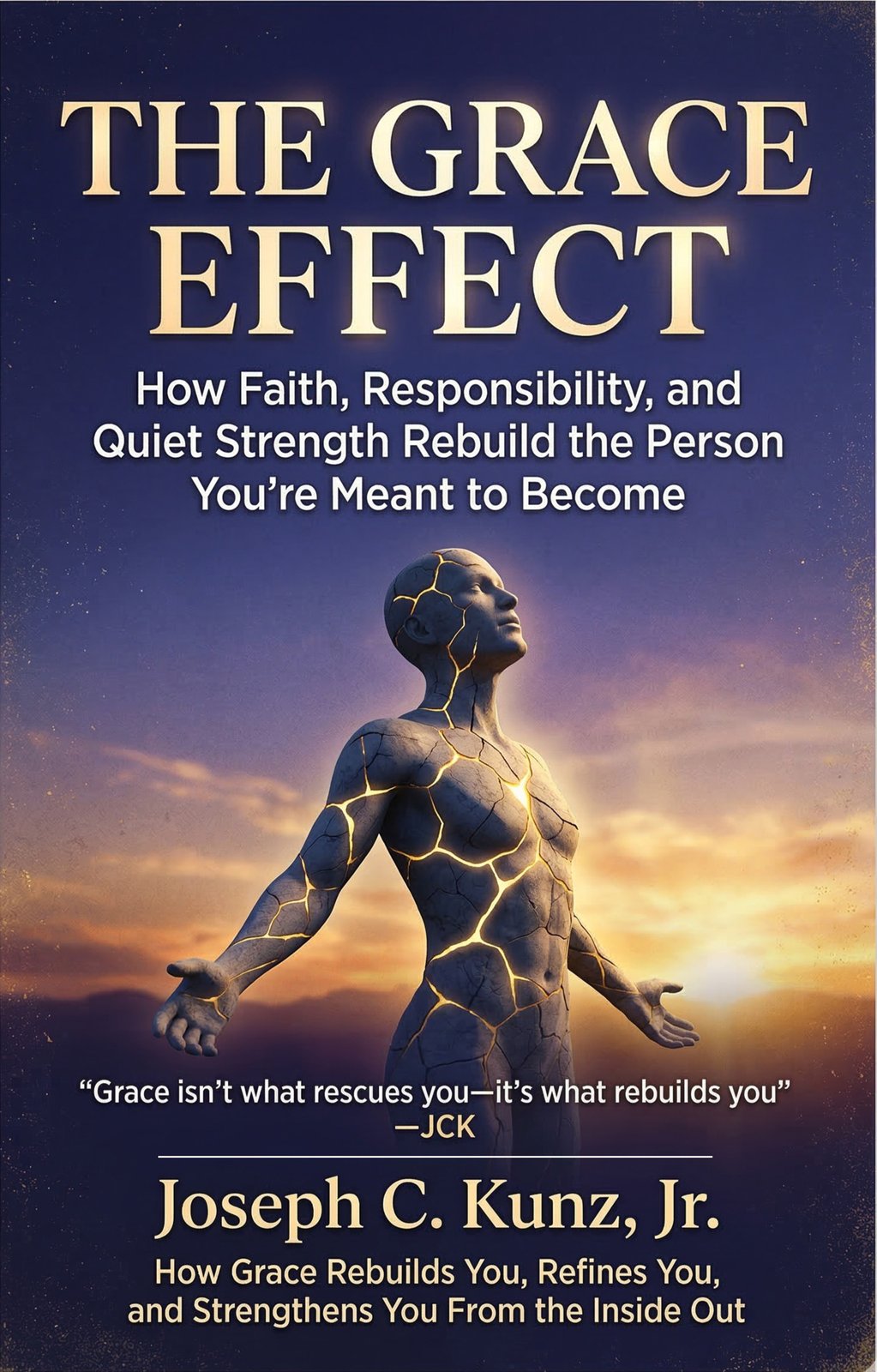
You’ve mastered the plan, the schedule, the system—but life still slips through your fingers, doesn’t it? The harder you grip, the faster it moves. That’s not failure. That’s your invitation.
Control was never the goal—it was the illusion. What you’ve called “strategy” was often fear in disguise, and what you thought was certainty was just borrowed time. But grace doesn’t need your control. It needs your surrender.
The truth is, you were never meant to hold it all together. You were meant to hand it over.
And when you do, something happens that no business plan, self-help book, or 4-a.m. grind ever gave you: peace that doesn’t depend on circumstance.
If you’re ready to stop managing your way through life and start living through grace, read the book that shows you how to turn collapse into clarity, and pressure into peace.
Because grace doesn’t fix what’s broken—it rebuilds you into someone unbreakable.
Coming soon.