The Moral Order That Built America: Why Faith Balances Justice, Mercy, and Grace
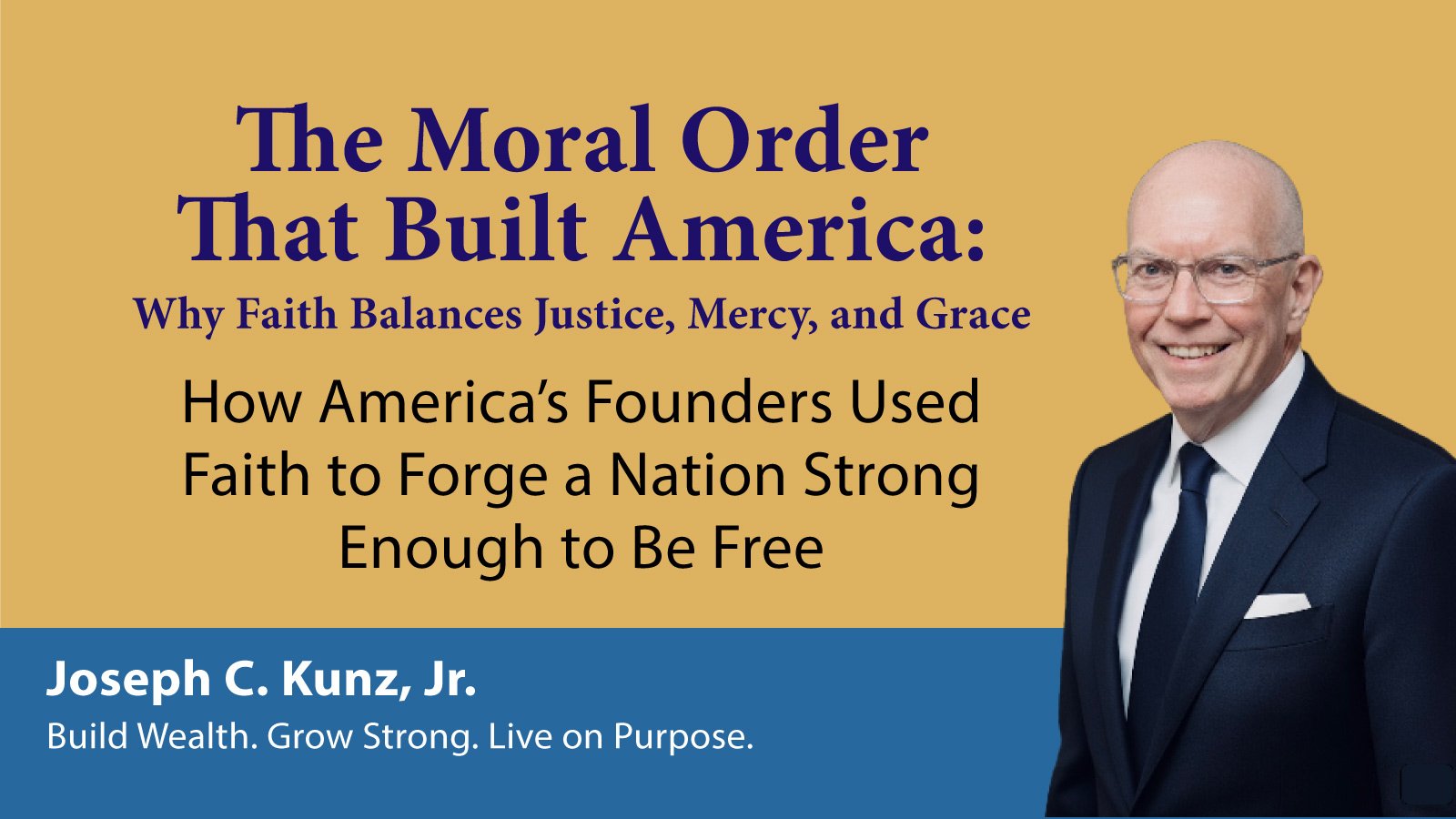
America’s strength was never just political—it was moral, built on faith’s ability to balance justice, mercy, and grace in a way that kept freedom from devouring itself. —Joseph C. Kunz, Jr.
How America’s Founders Used Faith to Forge a Nation Strong Enough to Be Free
By Joseph C. Kunz, Jr.
Synopsis
America’s strength was never just political—it was moral. In this essay, Joseph C. Kunz, Jr. argues that the Founders built a nation realistic enough to expect human weakness and principled enough to demand moral restraint. They knew freedom without boundaries becomes chaos, and law without mercy becomes tyranny. What made the American experiment sustainable wasn’t perfect people, but a moral framework—anchored in faith—that balanced justice, mercy, and grace.
Kunz explains how that three-part moral order functioned as liberty’s guardrail: justice for accountability and truth, mercy for humane strength and restoration, and grace for renewal, forgiveness, and second chances. He warns that modern moral relativism and political opportunism are breaking the triangle—turning justice into cruelty, mercy into indulgence, and grace into grievance-free surrender. And he ends with a builder’s conclusion: the repair won’t come from Washington. It starts in conscience—homes, habits, and daily choices that rebuild self-governance from the inside out.
Without faith, justice turns cruel. Without justice, mercy turns weak. Without grace, both lose meaning—and nations lose their soul. —JCK
I. Introduction: The Forgotten Framework
We talk a lot about freedom in America—but not nearly enough about what keeps it from falling apart. Freedom, by itself, is a wild, unstable force. It can build empires or burn them to the ground. What steadied it at the founding wasn’t politics. It was faith.
Faith set the boundaries for liberty—it said, You are free, but you are also accountable. It said that every man has rights because he was made in God’s image, and every man has duties because he is not God. That balance—between divine dignity and divine humility—is what made freedom sustainable.
America’s moral framework was built on a triangle of justice, mercy, and grace. Justice provided structure. Mercy gave it humanity. Grace gave it purpose. Remove any one, and the triangle collapses—just as we see happening today.
II. The Moral Architecture of the Founders
The Founders didn’t try to create a perfect society—they tried to create a moral one. They believed that human beings are capable of greatness but prone to corruption. Madison said it best: If men were angels, no government would be necessary. They designed a republic that assumed moral imperfection but demanded moral effort.
To them, religion wasn’t a threat to liberty; it was liberty’s guardrail. John Adams wrote, Our Constitution was made only for a moral and religious people. They understood that laws without virtue are dead words, and politics without faith devolves into power worship.
They didn’t need a theocracy. They needed a people who believed that right and wrong were real, that truth was not negotiable, and that freedom came with a price tag called responsibility. That moral clarity became the backbone of their idea of justice—the kind that protects freedom instead of consuming it.
III. Justice: The Backbone of Order
Justice was the first leg of America’s moral triangle. It was rooted not in bureaucracy or emotion, but in truth—eternal, moral truth. The Founders believed that justice flowed from the Creator, not the crowd. That’s why our rights are called unalienable. If government gives them, government can take them. But if they come from God, no man can strip them away.
True justice is not revenge—it’s restoration. It calls us back to order, accountability, and consequence. It says freedom is a privilege that must be guarded by virtue.
We’ve twisted justice into ideology before—and we’re doing it again. Every generation finds new ways to confuse fairness with favoritism, to demand equality of outcome instead of equality under law. Justice has never been perfect, but when it trades truth for trend, it loses its soul. Once justice picks a side, truth becomes optional—and history begins to repeat itself.
IV. Mercy: The Heart of Civilization
Mercy is what keeps justice human. It acknowledges that while truth matters, people matter too. The Founders understood this balance intuitively—because they lived through war, betrayal, and reconciliation. Mercy allowed them to punish rebellion without crushing the spirit that birthed liberty itself.
Mercy is not weakness; it’s strength restrained by compassion. It’s knowing when to enforce and when to forgive. It’s the ability to say, “You were wrong,” without saying, “You’re worthless.”That’s how civilizations heal without forgetting what they stand for.
But mercy today has been replaced by tolerance—and tolerance, as we practice it, isn’t moral. It’s lazy. It’s the refusal to stand for truth under the banner of kindness. Real mercy costs something. It requires discernment. It requires courage. It requires grace.
V. Grace: The Unseen Glue
Grace is the invisible force that made America more than a political project—it made it a moral promise. Grace is what transforms justice and mercy into something living. It’s the willingness to forgive even when you have every right not to.
Grace teaches that we can start again—that no failure, no flaw, no sin defines the entirety of a person or a nation. That belief fueled America’s resilience. It’s why this country rebuilt after war, after depression, after division. Grace gave America its second chances.
But grace has been replaced with grievance. Forgiveness with outrage. Redemption with revenge. We’ve forgotten that freedom was built on the grace of men who forgave their enemies, united with their opposites, and still believed Providence had a plan.
VI. The Collapse of the Moral Triangle
When faith is mocked, justice politicized, and mercy cheapened, grace cannot survive. That’s where we are now. We’ve built a culture where everyone demands rights but no one accepts responsibility.
Justice without mercy looks like cancel culture—it punishes endlessly but never redeems. Mercy without justice looks like chaos. And grace without truth looks like moral surrender. We’ve replaced humility with hubris—and we’re paying the price.
When a nation stops believing it answers to God, it starts believing it can be its own god. That’s when freedom turns toxic—when power becomes the new religion, and self-interest becomes the new commandment.
But decline doesn’t need to end in destruction—it can end in awakening.
VII. Restoring the Moral Order
The good news is that rebuilding starts small. You don’t need permission from Congress to live by principle. You just need conviction.
Faith rebuilds what politics tears down. Families reinforce what culture forgets. Communities remind us that grace is not weakness—it’s strength under control.
The moral revival we need won’t come from the top down. It’ll come from the inside out—from fathers who lead with integrity, mothers who model mercy, and citizens who believe that self-governance begins with self-control.
We can’t legislate grace. But we can live it—and when we do, laws start to matter less because hearts start to change.
VIII. Conclusion: The Spiritual Republic
The American experiment was never just political—it was spiritual. The Founders built a framework where faith wasn’t forced but freely lived, where justice was righteous, mercy was wise, and grace was abundant.
Our task is to rebuild that moral order—not by nostalgia, but by courage. By choosing principle over popularity, forgiveness over fury, humility over hubris.
Freedom without faith is fragile. And a republic without grace eventually forgets what made it worth defending.
The moral order that built America wasn’t written in ink—it was written in conscience. And it’s time we start reading it again. —JCK
Key Terms: What I Mean (and Don’t Mean)
1. The Founders: Not flawless heroes or outdated relics. Men who understood human weakness yet believed in human worth—builders of a republic rooted in divine accountability. They didn’t seek utopia; they sought order anchored in faith, virtue, and humility before God.
2. Justice: Not vengeance dressed up as virtue. The moral order that gives freedom its boundaries—accountability without cruelty, authority without corruption.
3. Mercy: Not moral weakness. The human face of justice—strength restrained by compassion, remembering that truth without love hardens into tyranny.
4. Grace: Not passive tolerance. The divine power that restores what justice corrects and mercy forgives—where freedom finds its soul.
5. Moral Relativism: The belief that right and wrong are subjective and change with convenience. It makes conscience negotiable and virtue optional until society drifts into chaos.
6. Political Opportunism: Not leadership, but moral theater—where conviction bows to strategy and power replaces truth. It’s politics unmoored from virtue.
Related Essays: For Readers Who Refuse to Settle
If this essay hit a nerve, these will go straight for the jugular.
1. First: The Real Foundation of Conservative Principles
Without faith, conservatism drifts into nostalgia or raw power; with it, principles gain moral clarity and strength.
Reader Comment: This essay made me see that conservatism isn’t just a philosophy—it’s a moral compass.
2. Grace and Compound Interest: The Real Secret Behind Every Great Investor and Builder
The same law that grows your money also grows your character—if you have the grace and discipline not to interrupt it.
Quote: Faith doesn’t just build empires—it builds endurance. —JCK
Related Book: Rebuilding the Moral Republic Starts in the Heart
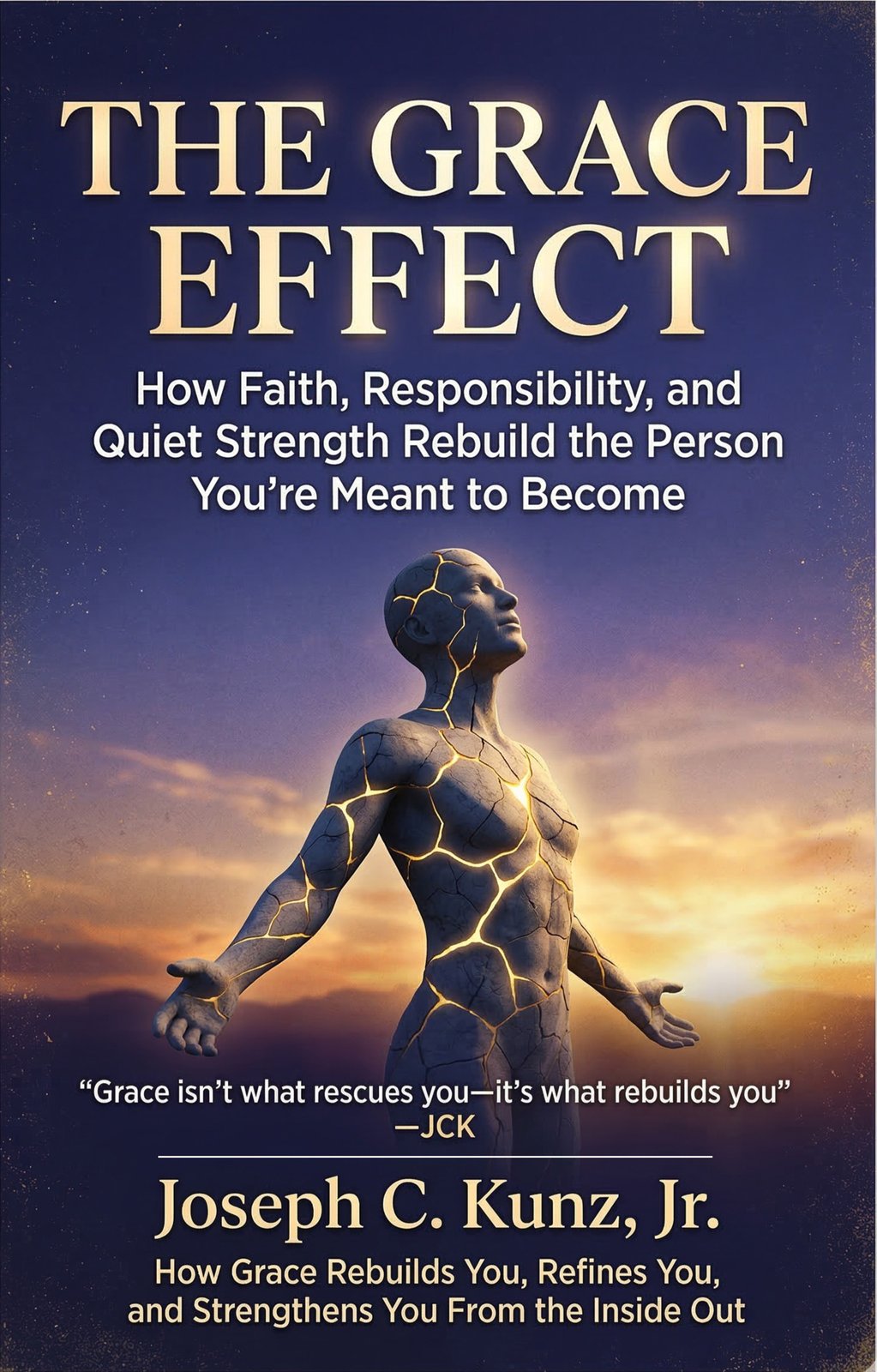
We don’t need another politician with talking points—we need men and women with backbones. People who understand that the real revolution isn’t fought in Washington; it’s fought in the human heart.
The Grace Effect isn’t theory—it’s a call to rebuild the moral framework that made America worth saving in the first place. It’s about reclaiming personal responsibility, practicing forgiveness when it’s hardest, and finding the courage to live by conviction when the world rewards compromise.
If you’re tired of outrage culture and empty virtue signals, this book will remind you what real strength looks like—steady, humble, and unbreakable. It will challenge you to lead your family, your work, and your life with the kind of grace that doesn’t whisper—it transforms.
Because power built on anger collapses. But power built on grace endures.
Read more in The Grace Effect. Start building the kind of strength that restores nations—one life at a time.
Would you like me to now write a short, one-sentence banner line to appear above the title on your site (for example: “Final essay in the 12-part Faith & Grace: The Missing Variables in Modern Success series”)? That helps close the loop for returning readers and gives you a visual cue for series completion.
Coming soon.