The Mirage of Judgment: Why Other People’s Opinions Aren’t the Truth
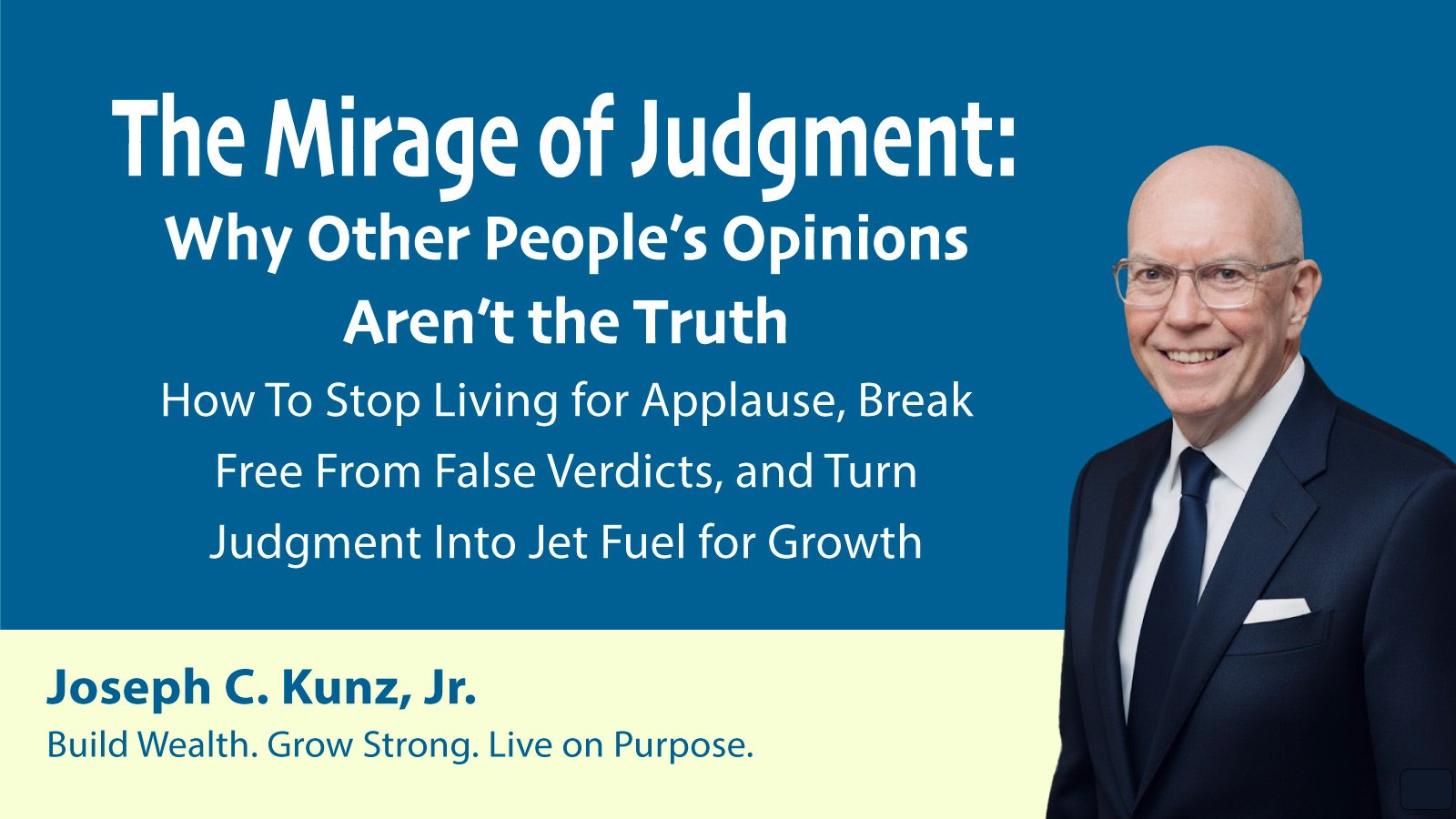
Most opinions about you aren’t based on truth, and the moment you stop living for their verdicts, you unlock the freedom to grow, build, and win on your own terms. —Joseph C. Kunz, Jr.
How To Stop Living for Applause, Break Free From False Verdicts, and Turn Judgment Into Jet Fuel for Growth
by Joseph C. Kunz, Jr.
Synopsis
Most people live under an invisible jury—replaying conversations, decoding facial expressions, and trying to manage opinions they can’t control. In this essay, Joseph C. Kunz, Jr. argues that most judgment isn’t truth at all—it’s distortion: ignorance, projection, envy, and half-seen snapshots mistaken for reality. The real trap isn’t being judged. It’s believing the judgment deserves the authority of a verdict.
Kunz shows how to walk out of the courtroom in your head by separating perception from reality and using misjudgment as resistance training instead of a prison. He reframes criticism as raw material for clarity, resilience, and patience—and exposes the real cost of living for applause: wasted time, shrunken risk-taking, and a life built to impress the wrong people. The turning point is simple: stop asking if they approve, start asking if you’re growing. When you do, judgment becomes background noise—and fuel.
Being judged isn’t the problem. Believing the judgment is true—that’s the trap. —JCK
I. Introduction: The Day I Walked Out of the Courtroom in My Head
It’s easy to feel like every step you take is under surveillance. Someone is watching. Someone is whispering. Someone is weighing your worth on a scale you can’t control. That belief alone can paralyze people into mediocrity.
But the moment I realized most judgment has nothing to do with me—that it’s built on ignorance, envy, or projection—I felt a strange kind of freedom. Their verdict didn’t define me. In fact, it gave me leverage: the chance to grow beyond the shadow of other people’s illusions.
II. The Phantom Judge in Your Head
Here’s the first principle: most of the judgment you fear doesn’t exist. It’s a phantom judge you’ve built in your own imagination.
• People don’t see the whole picture. They only see a headline, a snapshot, a rumor.
• People project their insecurities onto you. What they dislike in themselves, they condemn in others.
• People aren’t thinking about you nearly as much as you think. They’re too busy worrying about themselves.
The phantom judge is powerful because it feels real. You replay conversations, dissect facial expressions, and build whole stories about what “they” must think. But once you see it’s smoke and mirrors, you stop defending yourself in a courtroom that doesn’t exist.
III. Reality vs. Perception: A Growth Opportunity in Disguise
Here’s the kicker: when someone judges you, the judgment says more about them than it does about you. That’s not just a nice saying—it’s a fact.
• If they misjudge your intentions, it’s a reflection of their cynicism.
• If they mock your ambition, it’s a reflection of their fear of trying.
• If they dismiss your success, it’s a reflection of their envy.
Now you’ve got a choice: waste your life rewriting their perception, or double down on aligning your life with your own reality. The latter is where real growth happens. It forces you to sharpen your values, clarify your vision, and own your story without apology.
The more you focus on living aligned with reality instead of perception, the less you’re at the mercy of public opinion—and the more unstoppable you become.
IV. The Gift of Misjudgment
Most people see being misjudged as an insult. I see it as a gift. Why? Because it forges the qualities weak people never develop:
• Clarity: If they’re wrong, then what’s right? Misjudgment forces you to define your values with precision.
• Resilience: When you keep showing up despite misunderstanding, you become bulletproof.
• Patience: The truth takes time to surface. If you can outlast false perception, reality will eventually prove you right.
Think of misjudgment as resistance training. The heavier the weight of their false opinion, the stronger you get by pushing against it. If everyone applauded you, you’d never develop the toughness to stand alone.
V. The High Cost of Believing Judgment
Here’s the ugly truth: if you swallow other people’s judgment as reality, you don’t just bruise your ego—you sabotage your entire life.
• Lost Time and Energy: Every hour spent replaying a conversation, rewriting your story in their eyes, or trying to “fix” their opinion is an hour stolen from building the life you actually want. You end up managing perceptions instead of creating progress.
• Shrunken Potential: People who live under the weight of judgment stop taking risks. They play small, keep quiet, and never step onto the stage they were meant for. Judgment doesn’t just silence your voice—it cages your destiny.
• Misdirected Success: Some people build their entire careers, marriages, or businesses trying to prove their critics wrong. But here’s the tragedy: even if they “win,” they’ve lived on someone else’s terms. They traded purpose for approval—and that’s a game you can’t actually win.
The cost isn’t abstract. It’s measurable. It’s the book you never wrote, the business you never started, the relationship you never deepened—all because you let a false verdict dictate your moves.
VI. The New Game: Growth Over Approval
Here’s where the transformation happens. Stop playing the game of approval. That’s the losing game—the hamster wheel that eats your time, money, and soul. Start playing the game of growth.
Ask yourself:
• Can I stay calm when misunderstood instead of blowing up?
• Can I respond with clarity instead of defensiveness?
• Can I use this as feedback—whether accurate or not—to become sharper?
Approval is temporary. Growth is permanent. When you stop asking “Do they like me?” and start asking “Am I growing through this?”—judgment loses its power. It no longer cages you; it catapults you.
VII. Conclusion: Walking Free From the Jury Box
The biggest growth opportunity of my life came when I realized judgment wasn’t reality. The jury wasn’t even watching the same movie I was living. Their opinions were noise, shadows, distortions.
And that’s when I walked out of the courtroom in my head. From that day on, other people’s opinions became background static. Not irrelevant—but no longer controlling the narrative.
Your life changes the moment you stop treating judgment as a verdict and start treating it as raw material for growth. That’s the secret: don’t fight it, don’t fear it—use it.
Other people’s judgment is just background noise. The only verdict that counts is the one you deliver by how you live. —JCK
Related Essays: For Those Ready to Stop Living Small
If this essay hit home, these will push you even further.
1. Impostor Syndrome Is a Luxury You Can’t Afford
Impostor syndrome isn’t humility—it’s hesitation, and it’s a costly luxury belief that robs you of opportunity, influence, and legacy.
Reader Comment: This essay punched me in the gut—I realized I was letting self-doubt keep me broke and invisible.
2. Faith Isn’t a Crutch — It’s a Competitive Edge
Faith isn’t weakness—it’s the firepower that gives you conviction when the world is unstable and noisy.
Related Book: Forget Their Verdict—Build Your Own Empire
Stop waiting for the world to clap. Stop shrinking under the weight of whispers.
And stop giving your power to ghosts that never earned it.
Grow so strong, so clear, and so rooted in reality that judgment can only bounce off you. Let the jury talk—you’ve already left the courtroom.
Here’s the truth: applause won’t pay your bills, approval won’t build your future, and no one’s verdict will leave an inheritance for your kids.
The only thing that matters is whether you’ve built something real—wealth, freedom, and a life on your own terms.
Ready to stop living under the jury in your head—and start stacking wins that make judgment irrelevant?
Ready to stop living under the jury in your head—and start stacking wins that make judgment irrelevant?
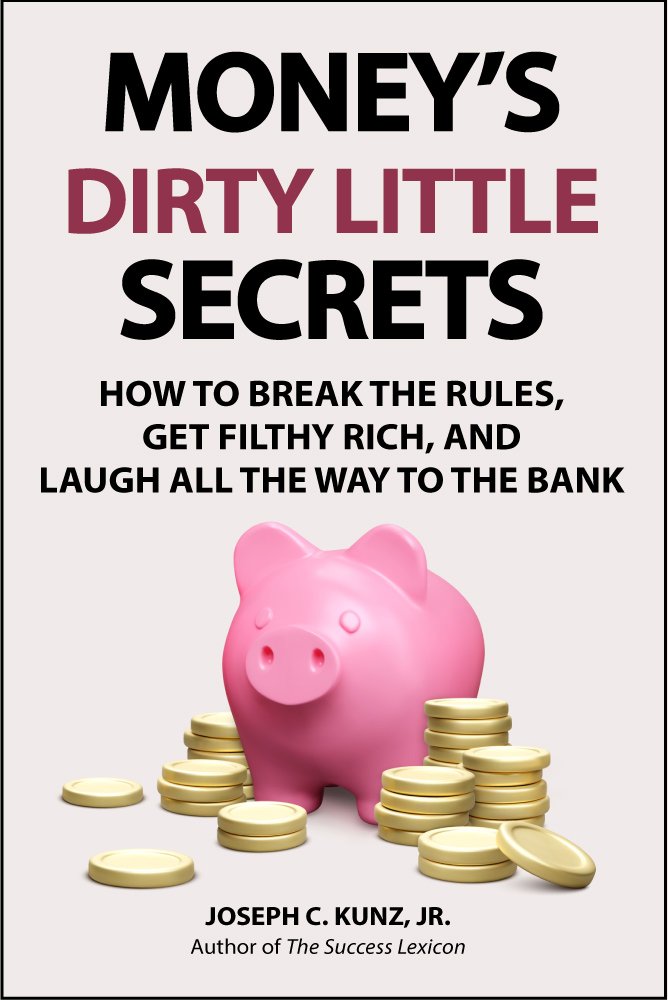
Grab my book Money’s Dirty Little Secrets and learn how to play by your own rules, not theirs.