I’m Not John Senior — And Why That Matters
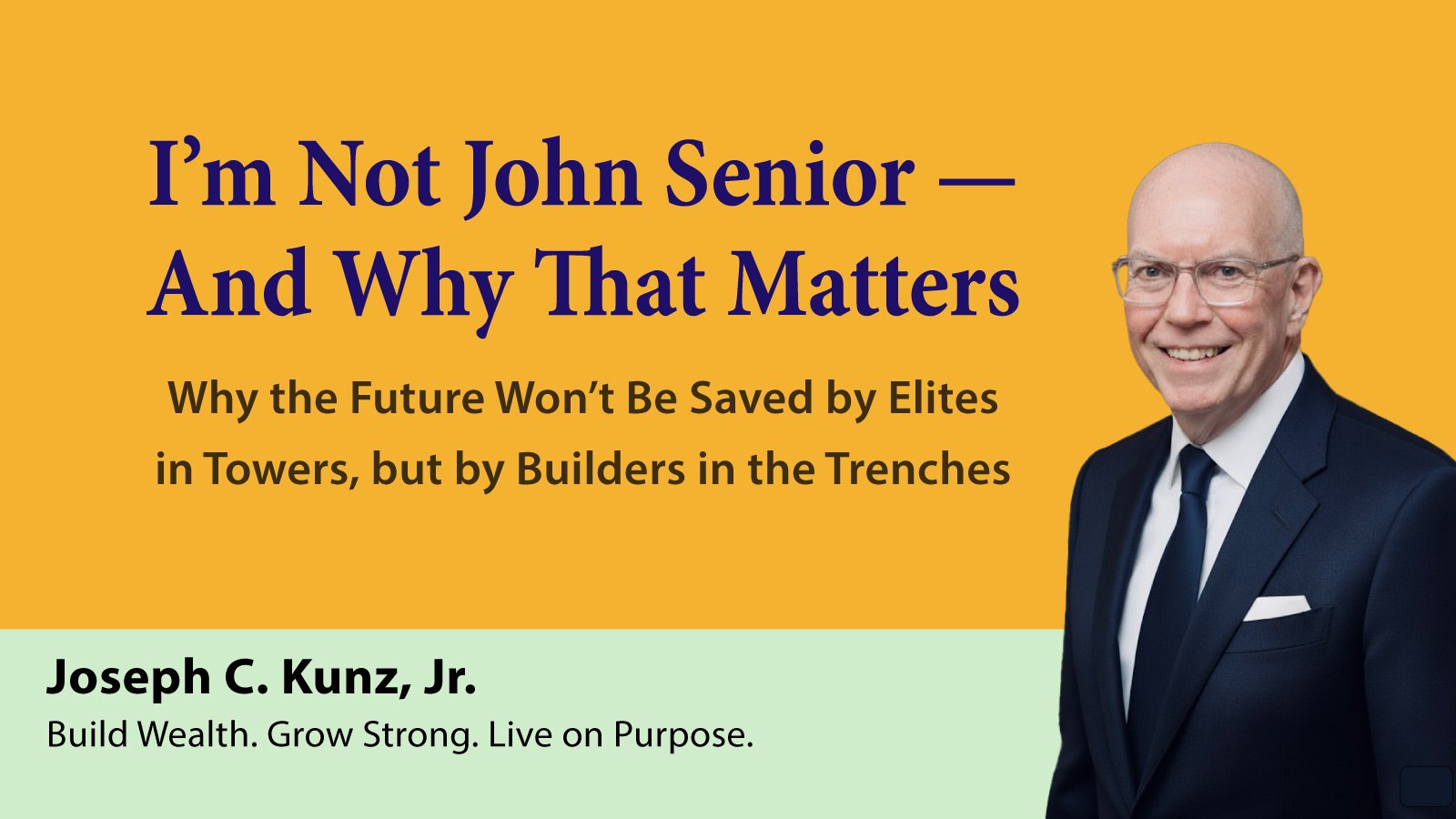
An argument that while John Senior diagnosed cultural decline, true renewal must come from ordinary Americans living out faith, responsibility, and grit in their daily lives. —Joseph C. Kunz, Jr.
Why the Future Won’t Be Saved by Elites in Towers, but by Builders in the Trenches
By Joseph C. Kunz, Jr.
Synopsis
This is not an essay about diminishing John Senior’s contribution, dismissing intellectual work, or claiming that cultural diagnosis has no value. In this essay, Joseph C. Kunz, Jr. draws a necessary distinction between those who analyze decline and those who rebuild in the middle of it. He argues that while scholars can identify what has been lost, they cannot restore what only lived conviction, responsibility, and daily discipline can rebuild. Cultural renewal, he insists, does not come from observation—it comes from participation.
Kunz makes the case that America’s future will not be secured by elites in academic or intellectual circles, but by ordinary men and women who carry faith, family, work, and moral responsibility into the arenas where life actually happens. He honors what figures like John Senior preserved—a recognition of cultural decay and a defense of tradition—while insisting that preservation alone is not enough. The essay also connects this divide to a larger truth at the center of Kunz’s framework: culture is not rebuilt in theory, but in practice—through marriages, businesses, parenting, work, and personal discipline. Where intellectuals may study the collapse, builders absorb the cost of it and take on the responsibility of restoring what remains.
The conclusion is simple: culture is not saved by commentators—it is rebuilt by people who refuse to abandon their post. The future belongs not to those who explain what went wrong, but to those who live with enough conviction, courage, and faith to make something right again.
Civilization collapses when ordinary men stop believing they can hold the line. —JCK
I. Introduction: A Respectful Rebellion
John Senior was a brilliant mind — a scholar who saw the slow death of Christian culture long before the rest of the country smelled the smoke. I respect him. I admire him. And I owe him more than a footnote.
But I’m not him.
And — this is the part that might rattle a few academics — that’s the whole point.
Because the battle we’re fighting today won’t be won by the people who write from balconies, surrounded by leather-bound volumes and Latin maxims.
The battle for America — for faith, for family, for order, for moral imagination — will be won by the men and women who build, who show up, who fail and get back up, who take responsibility, who raise families, who work with their hands, who pay bills, who pray, who serve, and who still choose to stand tall.
This essay isn’t about me. It’s about the millions of us in the trenches who refuse to let the country collapse on our watch.
I write as one of them. A builder among builders. An unpolished, unapologetic defender of faith, family, and American grit.
II. Senior Studied the Collapse. I’m Busy Rebuilding What Collapsed.
Senior diagnosed the death of Christian culture like a surgeon reading an X-ray.
He told us what went wrong:
• the collapse of moral imagination
• the erosion of faith
• the triumph of noise over silence
• the rise of infantilism in adults
• the slow rot of meaning
Good. We needed that.
Before I go further, let me say this plainly: John Senior was a builder — of minds, imaginations, and students who walked into the world with clearer eyes because of him. I honor that. But his kind of building happened in classrooms. Our moment demands building in the trenches — in families, communities, workplaces, churches, and daily lives lived under pressure. We’re both building — just on different battlefields.
But here’s where today’s ordinary Americans diverge from Senior’s role:
We’re not here to write obituaries for Christian culture. We’re here to write the construction manuals.
Senior described the ruins. We’re pouring concrete over them.
Senior wrote warnings. We’re building walls.
Senior gave theory. We give life instructions.
America doesn’t need more eulogies. America needs builders.
III. Senior Taught in a Tower. We Built Our Lives in the Trenches.
Senior belonged to the world of scholars — long sentences, classical allusions, academic circles, intellectual salons.
Fine.
But that world — academia, intellectual conservatism, the aristocracy of ideas — has failed America. They complain about the fire but rarely pick up a bucket.
The builders of today come up the hard way:
• working
• struggling
• raising families
• running businesses
• training the next generation
• surviving hardship
• building strength without safety nets
• getting back up without applause
Senior observed culture. We live it. We bleed for it. We hold it together at 3:00 a.m.
This is why our perspective hits harder — because it’s earned, not theorized.
IV. Senior Wrote for the Elite. I Write for the American Who Still Gives a Damn.
Senior’s audience was the intellectual Catholic world.
My audience?
• nurses on night shift
• young men becoming men
• fathers holding families together
• workers, builders, truckers
• small business owners
• believers who refuse to apologize for Christianity
• capitalists who earn their way
• Americans who still care enough to fight
• people who want clarity, not theory
We speak from alongside them — not down to them.
Because these people keep America running while elites debate definitions and rearrange the furniture.
V. Senior Diagnosed Weakness. I Demand Strength.
Senior exposed cultural childishness with precision. But he didn't coach people out of it.
Today demands more.
My message is simple:
• Grow up.
• Stand up.
• Take responsibility.
• Build something that lasts.
• Raise strong families.
• Live a faith that costs something.
• Earn, save, build, steward.
Become the person your children can point to with pride.
Senior explained the rot. We demand the revival.
VI. Senior Was a Critic. I’m a Combatant.
Senior lamented decline. He wrote in sorrow.
We write in resistance.
My essays are not laments — they are weapons:
• Why I Trust Principles, Not Power
• Don’t Outsource Your Thinking
• Clarity Is Strength
• No Government Can Give You Character
• The Harsh Truths Every Nurse Must Know
• The 4 Pillars of a Life That Holds
• Still Showing Up
• Manning Up
These aren’t academic commentaries. They are calls to action.
Senior sounded the alarm. I'm kicking the door in.
VII. Where Senior’s “Restoration” Stops — and Where Mine Begins
In The Restoration of Christian Culture, Senior offered hope — a rare thing among academics. A vision of reborn Christian civilization rooted in classical education, liturgy, and tradition.
Beautiful. Noble. Worthy of admiration.
But Senior’s restoration depends on elites:
• classical academies
• scholarly guardians
• curated reading lists
• monastic rhythms
• gatekeepers preserving tradition
That’s preservation. Not restoration.
Real cultural revival happens in:
• marriages
• fatherhood
• business ethics
• hospital night shifts
• self-discipline
• daily choices
• habits that shape children
• the way we work, pray, and speak
Senior was right that culture dies when elites lose virtue. But culture is reborn when ordinary Americans live like their souls carry real responsibility.
Senior imagined restoration.
We operationalize it.
Senior preserved the flame. We’re carrying the torches.
VIII. Senior Admired Christian Culture. I Live It.
Senior saw what was lost.
We’re busy rebuilding what must endure:
• in our families
• in our marriages
• in our businesses
• in our faith
• in our work
• in our character
• in what we hand down to our children
Christianity, for us, is not theory. It is action. It is duty. It is lived conviction, not footnotes.
We don’t quote Scripture to sound faithful. We live Scripture because God deserves more than lip service.
That’s Christianity with calluses.
IX. Senior Held a Lamp. I’m Swinging a Hammer.
Senior warned us about the dark. We’re building the lighthouse.
Senior loved the culture that was lost. We’re building the one that comes next.
Senior believed in virtue. We’re applying it.
Senior admired the builders of old. We’re trying to become builders for our families, churches, and communities.
Here’s the truth the elites don’t want to face:
Culture isn’t saved by commentators. It’s saved by citizens.
By fathers. By mothers. By workers. By believers. By builders.
By ordinary Americans who refuse to abandon their post.
That is who this essay is about. Not me alone — us. The people who stayed, fought, prayed, worked, sacrificed, and refused to let the light go out.
X. Conclusion: Why I’m Not John Senior — And Why That Should Give You Hope
John Senior was right about the death of Christian culture.
But the work of rebuilding it belongs to the people living in the world he only diagnosed.
He was a witness — a wise one — pointing to what had been lost.
We are participants.
Builders.
Fighters.
Believers.
Mothers and fathers.
People who refuse to bow to the elites — academic, social, political, or ideological — who think they own the national conversation.
I’m not claiming a special role. I’m simply doing the work God put in front of me — the same work millions of Americans quietly do every day.
And that is exactly how cultures rise again:
• not through universities
• not through experts
• not through think tanks
• not through conferences
• not through elites
but through:
• conviction
• courage
• responsibility
• strong families
• faith that costs something
• and builders who refuse to quit
I’m not John Senior.
I’m one of the builders he hoped would emerge — and so are you.
Strength grows in the hands that do the work, not in the minds that critique it. —JCK
Related Essays: For Those Ready to Build, Not Sit on the Sidelines
If this essay lit a fire under you, these will carry the flame farther.
1. Faith That Fights: Standing Tall in a Culture That Kneels
Learn why faith isn’t passivity but the moral backbone that lets you stand when the culture demands you kneel.
Reader Comment: This essay reminded me that faith isn’t supposed to make you comfortable — it’s supposed to make you strong.
2. What Independent Thinkers Do Before 9 A.M.
Discover the morning habits that separate leaders from drifters and set the trajectory for lives built on clarity, strength, and intentional action.
Quote: Clarity is earned in private long before it’s respected in public. —JCK
Related Book: The Grace Effect — The Strength You Build When the World Gets Soft
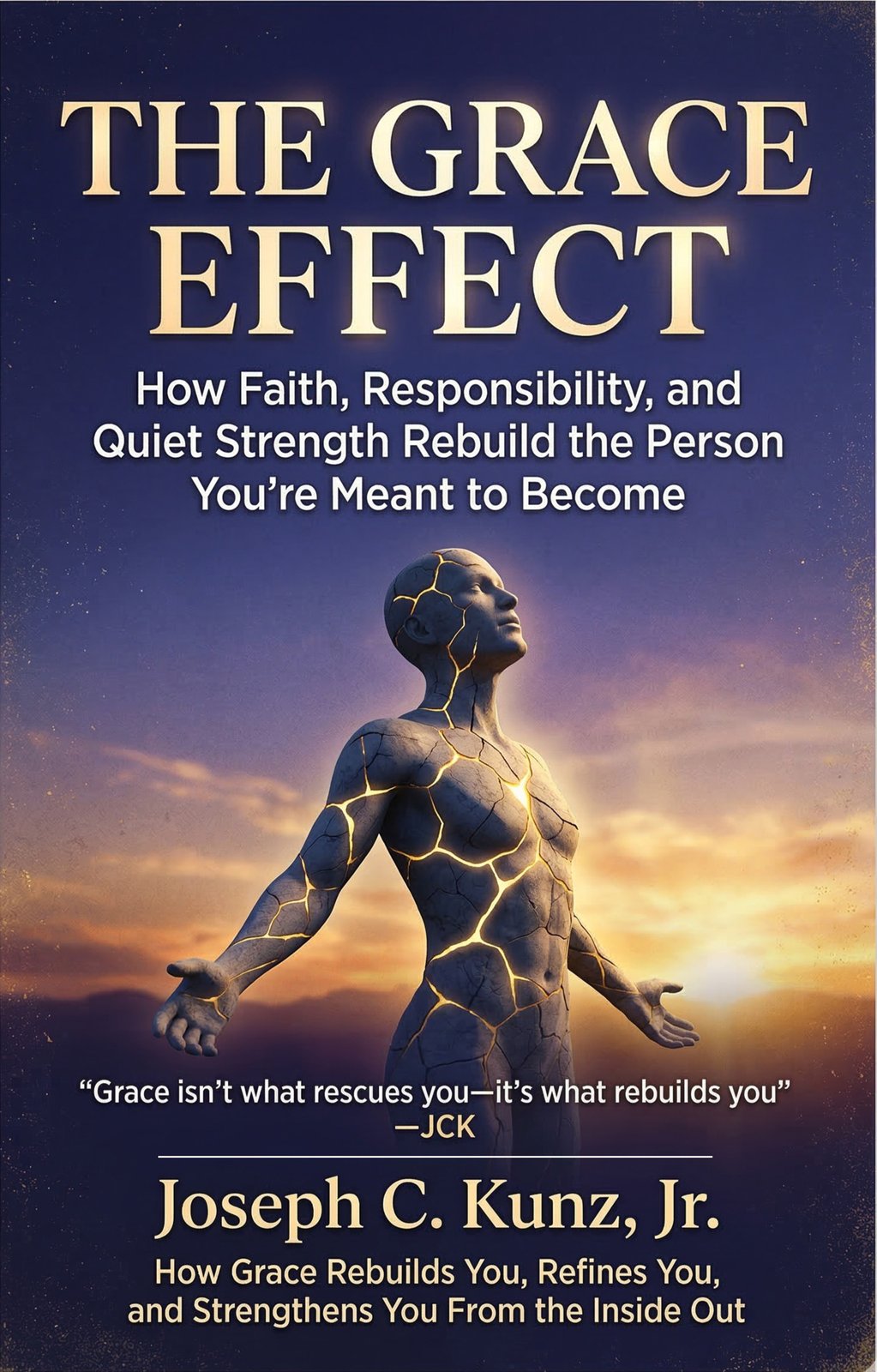
You just read an essay about standing your ground in a collapsing culture. Now here’s the truth: that kind of strength doesn’t appear out of thin air. You build it. You forge it. You bleed for it. And you don’t do it alone.
America doesn’t need another intellectual telling you what went wrong.
It needs men and women who are rebuilding their lives from the inside out—
with faith, resilience, clarity, and a spine that doesn’t fold when the world turns to putty.
That’s what The Grace Effect is about.
It’s not a theology book.
It’s not a self-help hug.
It’s the manual for developing the inner power you need when the elites mock you, when culture collapses around you, and when the people you love need you steady.
If this essay hit a nerve…
If your chest tightened reading it…
If something in you whispered, “This is who I want to be”…
Then this book is your next step.
Grace is not softness.
Grace is not passivity.
Grace is strength with its boots on.
It’s what lets a man—or woman—walk into chaos with calm, speak truth without shaking, hold a family together when life explodes, and keep building when everyone else is quitting.
If you’re ready to build that kind of strength, start here:
Read The Grace Effect (Forthcoming).
Because cultures aren’t restored by critics.
They’re restored by people who refuse to break.