Businessman, Not an Entrepreneur
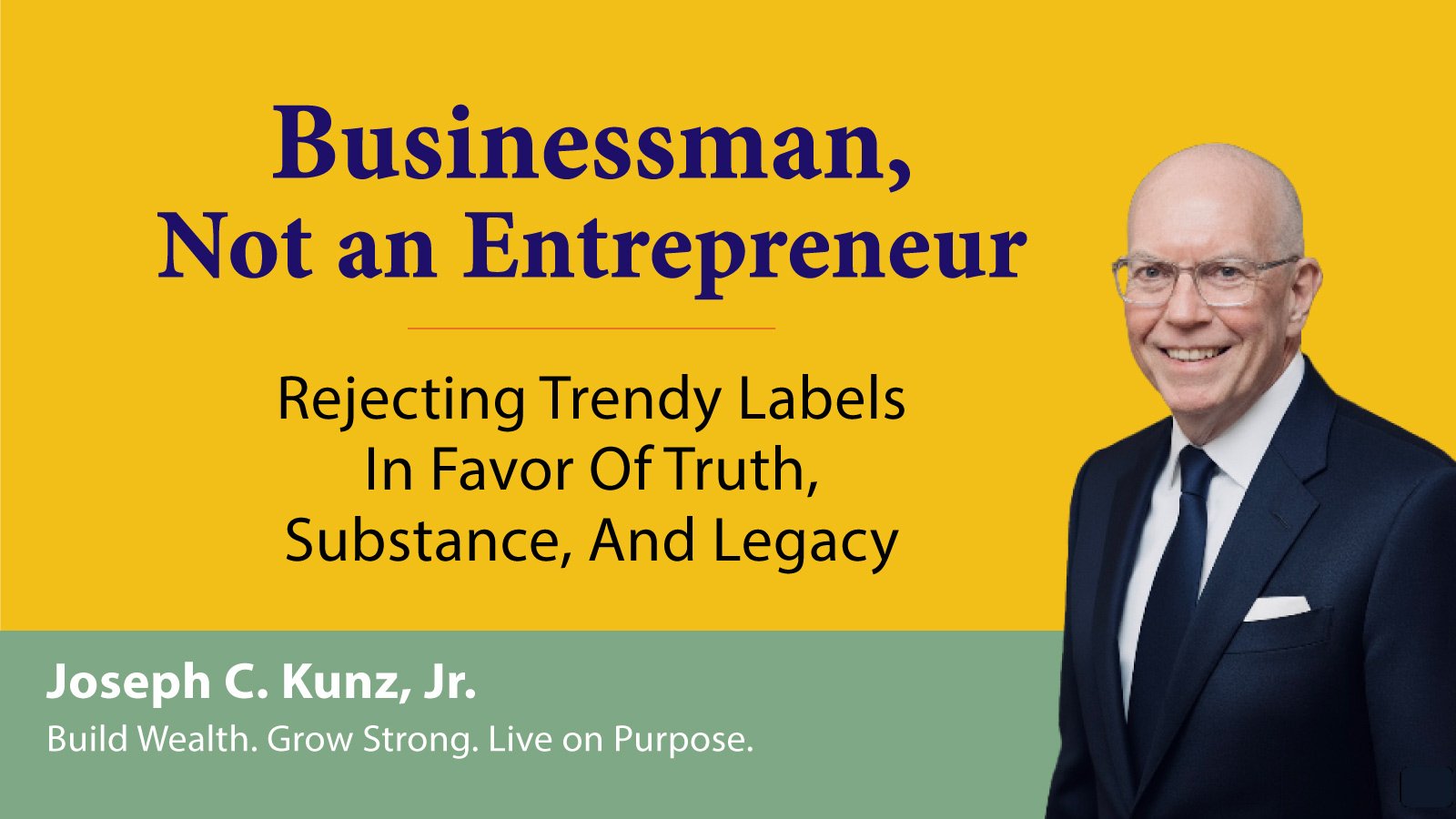
I’ve spent more than forty years building businesses, but I’ve never once called myself an entrepreneur—and I don’t plan to start now. —Joseph C. Kunz, Jr.
Rejecting Trendy Labels In Favor Of Truth, Substance, And Legacy
By Joseph C. Kunz, Jr.
Synopsis
This is not an essay about attacking people who use the word “entrepreneur,” dismissing ambition, or denying that innovation and risk-taking matter. In this essay, Joseph C. Kunz, Jr. draws a sharper and more practical distinction: the difference between labels that sound impressive and identities that reflect reality. He argues that when a word becomes a trend or a costume, it stops clarifying who you are and starts distorting how you think, act, and build.
Kunz makes the case that the modern use of “entrepreneur” has been diluted by hype, overuse, and cultural signaling, turning what was once a meaningful description into a vague and often misleading identity. He explains why, after more than forty years of building real-world businesses—serving customers, making payroll, paying taxes, and growing wealth steadily—he rejects the label in favor of more precise and grounded terms: businessman and investor. The essay also explores the deeper implications of this choice, showing how words shape identity, identity shapes behavior, and behavior ultimately determines whether a person builds something durable or chases something temporary. In a culture obsessed with appearance and recognition, Kunz argues for a return to substance, discipline, and long-term thinking.
The conclusion is simple: what you call yourself is not decoration—it is direction. Choose words that reflect truth, not trends, and you will build differently, think differently, and leave something that lasts. In the end, credibility, wealth, and legacy are not built on labels—they are built on reality.
Call yourself what you truly are, not what sounds impressive. The truth always outlasts the trend. –JCK
I. Introduction: Why I Refuse the Label
I’ve spent more than forty years building businesses, but I’ve never once called myself an entrepreneur. And I don’t plan to start now.
Why? Because the word doesn’t mean what it once did. Once, it carried the weight of invention, vision, and risk. Now it’s become the favorite title of wannabes and “Instagram CEOs”—people more obsessed with posting selfies in coffee shops than actually running profitable businesses.
I’m not an entrepreneur. I’m a businessman. I’m an investor. And I believe being precise about those words gives me—and my readers—a stronger identity than chasing a hollow trend.
II. The Rise and Dilution of “Entrepreneur”
There was a time when “entrepreneur” meant something rare. It conjured Thomas Edison, Henry Ford, Andrew Carnegie—men who built industries from scratch.
But today?
• The tech world slapped the label on every hoodie-wearing founder chasing venture capital.
• Influencers adopted it to sound bigger than they were.
• And now, almost anyone with a Shopify store or Etsy page is suddenly an entrepreneur.
When everyone’s an entrepreneur, no one is. The word has become a costume people put on to look impressive, even if the numbers don’t back it up.
III. Why I Don’t Call Myself an Entrepreneur
I’ve had people call me one. Early on, a banker said, “You’re a real entrepreneur, Joe.” I shook my head. No, I wasn’t. I was running a medical training business, paying taxes, serving clients, and making payroll. That wasn’t entrepreneurship in the modern, Silicon Valley sense. That was just business.
For me, three problems stand out:
1. It’s too generic. When everyone claims it, the word loses power.
2. It’s become trendy. It signals hype, not substance.
3. It doesn’t fit my story. I didn’t chase unicorns or investors. I built steady, boring businesses that paid the bills and grew wealth over decades.
Calling myself a businessman and investor is both truer and sharper.
IV. What Being a Businessman Really Means
A businessman deals in reality. An entrepreneur—at least in today’s pop-culture sense — too often deals in image.
A businessman:
• Builds for the long term.
• Focuses on profit, not just growth.
• Creates stability for employees, customers, and family.
• Measures success by durability, not headlines.
That’s the life I’ve lived. Michele and I didn’t build our business to impress anyone online. We built it to serve people, sustain our family, and leave a legacy. That’s what businessmen—and businesswomen—do.
V. Why I Also Call Myself an Investor
Business is about creating wealth. Investing is about preserving and multiplying it.
By calling myself an investor, I’m signaling a mindset:
• Discipline over hype.
• Patience over excitement.
• Numbers over narratives.
Investors think in decades. They know that steady returns beat quick thrills. Investors build systems that outlive them. That word matches how I’ve managed money, grown wealth, and prepared to leave something lasting for my children and grandchildren.
VI. The Power of Choosing the Right Words
This isn’t about vanity. It’s about truth. Words:
• Shape identity. If you call yourself an entrepreneur chasing ideas, you’ll act one way. If you call yourself a businessman managing systems and assets, you’ll act another.
• Shape credibility. People trust businessmen and investors. They roll their eyes at “entrepreneurs” who disappear the minute the hype fades.
• Shape legacy. What you call yourself is how you’ll be remembered.
Wannabe entrepreneurs burn out chasing clout. Businessmen build legacies. Investors pass on wealth. That’s the difference.
VII. What This Means for You
If you’re serious about business, don’t get caught up in labels. Don’t call yourself what sounds cool—call yourself what’s true.
If you run a business to provide for your family, serve your customers, and create wealth—say that. If you invest to grow and preserve what you’ve built—own that too.
Rejecting inflated titles doesn’t make you small. It makes you real. And in a world addicted to appearances, real is rare—and respected.
VIII. Conclusion: Words Build Legacy
I’ll never knock someone who calls themselves an entrepreneur. But I’ll never wear the label myself. It’s too broad, too trendy, too hollow.
I’m a businessman and an investor. That’s who I am. That’s who I’ve been for over forty years. And that’s what I want my children, grandchildren, and readers to remember when they see my name on a book.
Because words aren’t decoration. They’re identity. And identity builds legacy.
Words aren’t decoration—they’re identity. And choosing the right ones is the first step in building a legacy that lasts. –JCK
Related Essays: For Readers Who Value Substance Over Hype
If this essay struck a chord, these two will deepen your perspective.
1. The Truth About Side Hustles: It’s Not a Business Until You Act Like It
Why treating your hustle like a hobby guarantees failure—and how real business starts with mindset, systems, and accountability.
Reader Comment: This essay made me stop calling my side hustle a business until I was ready to treat it like one. That shift changed everything.
2. Discipline Isn’t Sexy, But It Pays Better Than Passion
Passion gets applause, but discipline builds wealth, freedom, and legacy.
Quote: The line that stuck with me: ‘Passion fades, but discipline compounds.’ I come back to that often. —JCK
Related Book: Stop Pretending. Start Building.
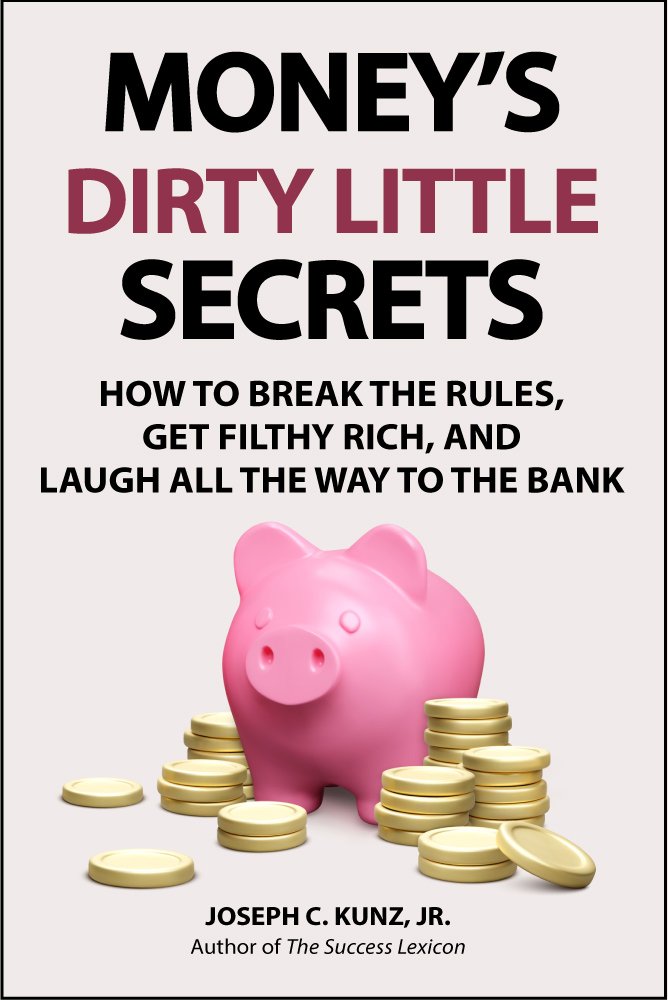
Money’s Dirty Little Secrets
If you’re tired of pretending, of hiding behind titles that sound cool but mean nothing—this book is your wake-up call. Money’s Dirty Little Secrets isn’t about being trendy, it’s about being free.
Free to build, free to win, free to leave something behind that your kids can actually inherit instead of hashtags and hype.
I didn’t write this book to stroke egos. I wrote it because too many good men and women are playing small, chasing “entrepreneur” vibes while their families are starving for leadership, stability, and legacy.
If you want to trade image for impact, and excuses for execution, it starts here. The truth is ugly. The truth is tough. But the truth will set you free—if you’ve got the guts to act on it.
Don’t just read about it. Live it. Grab your copy of Money’s Dirty Little Secrets.
Because your family deserves more than a label. They deserve a legacy.