The Truth About Side Hustles: It’s Not a Business Until You Act Like It
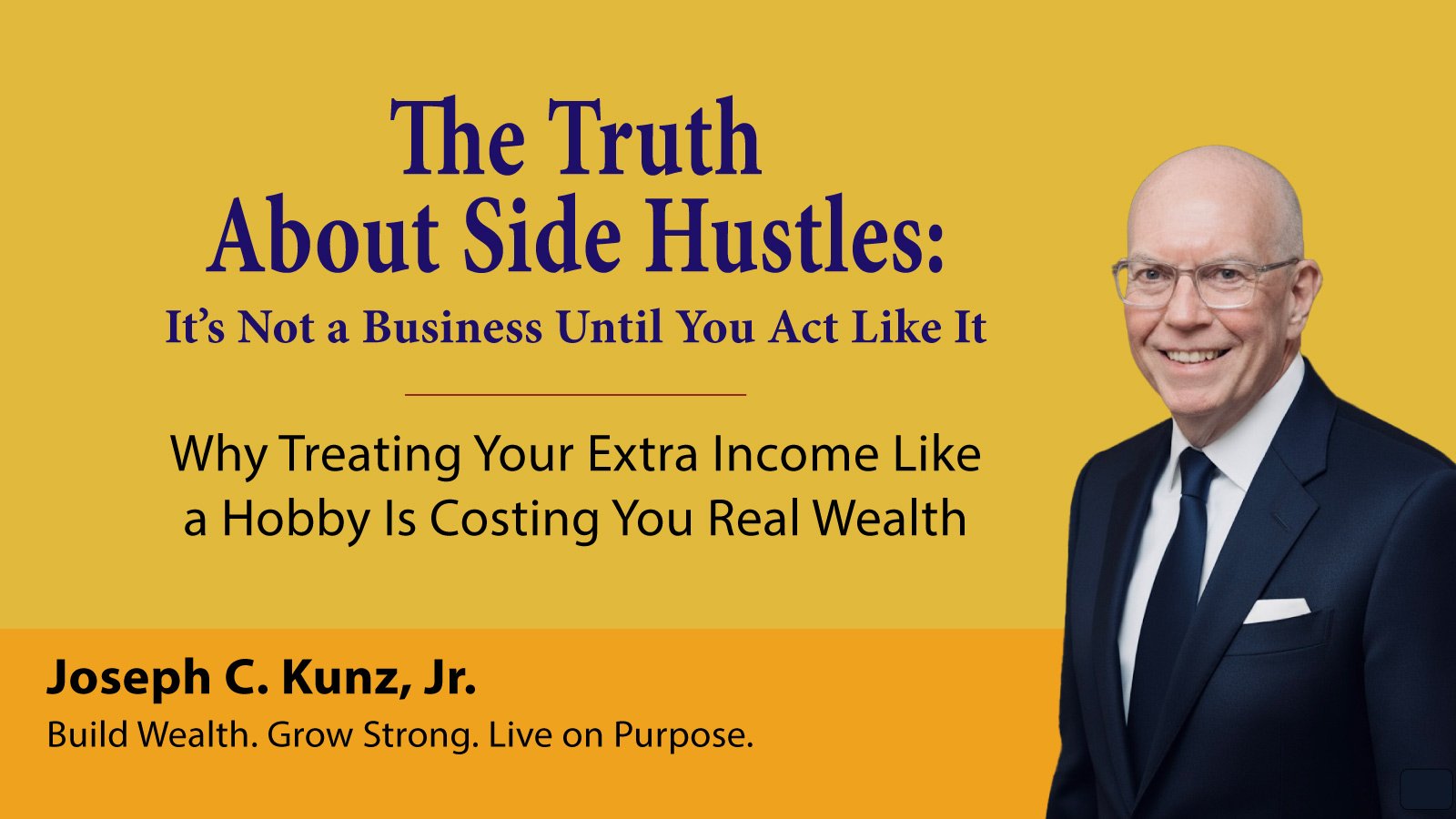
Your side hustle won’t become a real business until you stop treating it like a hobby and start running it like your future depends on it—because it does. —Joseph C. Kunz, Jr.
Why Treating Your Extra Income Like a Hobby Is Costing You Real Wealth
By Joseph C. Kunz, Jr.
Synopsis
This isn’t a hype-filled “side hustle” pep talk or a motivational poster about grinding after work. In this essay, Joseph C. Kunz, Jr. argues that most side hustles fail for one simple reason: people treat them like hobbies and then act surprised when they pay like hobbies. A logo, a name, and an Instagram account don’t make you a business. Systems do. Structure does. Ownership does. If your hustle is just random bursts of effort, last-minute scrambling, and “I’ll get serious later,” it’s not building freedom—it’s just keeping you busy.
Kunz breaks down the real killers—no strategy, no commitment, and no structure—and then draws the line between scrappy dabbling and strategic building. He shows what changes when you start thinking like a CEO (even if you’re the only employee), tracking revenue like a grown-up, and building repeatable systems instead of living on adrenaline. He also reminds you of the part most people ignore: the IRS already treats your hustle as a business, which means acting like a professional isn’t optional if you want deductions, control, and long-term wealth. The essay closes with a blunt challenge: your side hustle is either a bridge to independence or a distraction dressed up as ambition. Treat it like a business, and it can become your training ground for wealth. Keep treating it like a hobby, and it will keep paying you in pocket change and excuses.
If you treat your side hustle like a hobby, don’t be surprised when it pays like one. —JCK
I. Introduction: Stop Calling It a Business If You Treat It Like a Hobby
Let’s get one thing straight: a side hustle isn’t a business just because it has a name, a logo, or an Instagram account. It becomes a business the moment you start treating it like one.
Too many people today are hustling hard—but building nothing. They’re trading time for money, chasing scraps of income, and calling it “entrepreneurship” when in reality, it’s barely more than a monetized hobby. They tell themselves they’re building “something on the side,” but there’s no structure, no system, and no real plan. Just a blur of Venmo requests, late-night scrambling, and the occasional dopamine hit from a small payday.
Here’s the hard truth: If your side hustle isn’t moving you toward financial independence, it’s just keeping you distracted from building something that could.
Real businesses don’t rely on luck or leftovers. They operate with intention. They have systems, goals, and accountability. They don’t hope to make money—they’re designed to. And if your side hustle is ever going to become the bridge to freedom, wealth, or impact, you have to make the mental shift—from extra income to serious enterprise.
This essay is your wake-up call. I’m not here to flatter you. I’m here to show you what separates the dabblers from the builders. And I’ll tell you now: it’s not talent. It’s mindset. It’s structure. It’s ownership.
Because once you start treating your side hustle like a business, everything changes—your income, your opportunities, and most importantly, your future.
II. Why Most Side Hustles Fail
Most side hustles don’t fail because the idea was bad. They fail because the execution was lazy, scattered, or unserious. People say they want freedom, but their habits say otherwise. They say they want to build wealth—but keep treating their business like a part-time experiment. And then they wonder why nothing grows.
Let’s break down the real reasons most side hustles die on the vine.
A. No Strategy, Just Scrambling
Too many people dive in headfirst without a clue what they’re actually trying to build. They’re reactive, not strategic—jumping on the latest trend, selling a random product, copying someone else’s model, or trying whatever’s hot this week.
There’s no plan. No direction. No system.
It’s hustle for hustle’s sake. And while that might earn a few bucks early on, it won’t get you to financial freedom. Because building real wealth isn’t about motion—it’s about movement with purpose.
B. No Real Commitment
Let’s be honest—most people treat their side hustle like a side fling. Something they flirt with when they’re inspired, bored, or broke. If they get busy or tired, it’s the first thing to go. Why? Because they never made a real commitment to it in the first place.
They’ll binge-watch shows, scroll social media, and complain about their 9–5—but can’t find one consistent hour a day to build their own income stream.
Here’s the rule: If you don’t respect your business, no one else will either.
C. Lack of Structure
The third killer is chaos. There’s no schedule, no tracking, no accountability. It’s all done on the fly. You forget to follow up. You forget to invoice. You forget to market. You forget why you started.
Businesses run on structure:
• Time-blocked hours
• Weekly goals
• Organized tools
• Clear processes
• Measurable progress
Without that, your “business” is just noise. If you want income that’s predictable, scalable, and real—you need structure. Otherwise, you’re just winging it—and winging it doesn’t pay.
III. The Mindset Shift: From Scrappy to Strategic
If you want your side hustle to grow beyond spare change and stress, you have to stop thinking like a scrambler and start thinking like a strategist. This shift is where everything begins to click—not because your circumstances change, but because you do.
A. Think Like a CEO, Even If You’re the Only Employee
You don’t need a corner office or a dozen employees to act like a business owner. What you need is clarity and responsibility.
CEOs:
• Set direction
• Make decisions
• Build systems
• Focus on results, not just activity
If your side hustle was a company and you were the CEO, would you fire yourself? Would you be proud of the leadership? Or would you call it a mess?
B. Set Revenue Goals and Track Performance
Hope is not a business model. You can’t build serious income without serious targets.
You need to know:
• What you're trying to earn this month
• What your costs are
• How many sales or clients it takes to hit your goals
• What’s working—and what’s a waste of time
If you don’t know your numbers, you don’t know your business.
C. Build Systems, Not Just Busywork
Scrappy hustlers run on adrenaline and all-nighters. Strategic builders run on repeatable systems.
Systems are the checklists, templates, automations, and routines that keep things moving even when you’re tired, distracted, or away. They turn chaos into consistency—and consistency is what builds wealth.
You don’t need to be perfect. You just need to be predictable.
IV. Why the IRS Already Sees Your Hustle as a Business
You might call it a side hustle.
You might think it’s just “extra cash.”
But guess what?
The IRS doesn’t care.
To them, income is income.
And the second you start making money outside your job, you’ve entered the world of business—whether you like it or not.
A. Taxes Don’t Care If It’s “Just for Fun”
You don’t get to write off your home office, mileage, internet bill, or equipment unless you’re treating your hustle like a legitimate business.
That means:
• Keeping records
• Separating personal and business expenses
• Tracking income and receipts
• Filing properly
B. Write-Offs and Deductions: A Reward for Acting Like a Business
When you structure your side hustle like a business, the tax code actually rewards you.
That includes deductions for:
• A portion of your rent or mortgage (home office)
• Internet, phone, and software
• Travel related to your hustle
• Marketing expenses
• Equipment and supplies
• Education and training
But here's the catch: you need to act like a real business. You need to know your numbers. And the second you do, you stop losing money to taxes—and start winning back control.
V. Your Side Hustle Is Your Training Ground for Wealth
You don’t need an MBA.
You don’t need a Shark Tank investor.
You don’t even need a perfect business idea.
What you need is a proving ground. A real-world lab where you learn, adapt, and grow.
That’s what your side hustle is. Not just a way to make extra money—but a low-risk, high-return education in how wealth is built.
A. Learn to Sell, Market, Negotiate, and Build
Running even the smallest business forces you to develop skills most people avoid their whole lives:
• How to sell
• How to market
• How to negotiate
• How to deliver value
These are the same skills that separate those who earn a living from those who build a life.
B. Your First $1,000 Matters More Than Your First Follower
We live in a world obsessed with likes and views. But attention isn’t the goal—profit is.
If you can earn your first $1,000 independently, you’ve done what most never will. That’s real power.
C. Side Hustle = Scaled Risk
You don’t need to quit your job. You don’t need to go all in. Your side hustle lets you start small and smart. It's risk with a parachute. You’re not gambling—you’re learning.
VII. Common Excuses — And How to Kill Them
People cling to excuses like they’re protecting something precious. But every excuse is a wall between you and the life you claim to want.
Let’s kill the biggest ones:
A. “I Don’t Have Time”
Yes, you do. You just don’t prioritize it.
Even one hour a day, five days a week is 260 hours a year. That’s six full-time workweeks.
B. “I Don’t Know How”
Nobody does at first. This isn’t rocket science. Most successful businesses are built on simple, repeatable actions. You don’t need to invent the next iPhone. You just need to start and learn as you go.
C. “It’s Just Extra Money”
Every dollar is a seed. Every small win is a training rep. Dismissing your hustle as “just” extra cash is how people stay stuck.
D. “I’ll Get Serious Later”
No, you won’t. If you’re not serious now, you won’t be serious when it gets harder. The window doesn’t open wider later—it closes.
VIII. Conclusion: Money Mastery Requires Ownership
There are two kinds of people in the world:
Those who hustle for extra money—
And those who build something that lasts.
The difference isn’t talent.
It’s not background.
It’s not luck.
It’s ownership.
If you want wealth, freedom, and power over your own life, you need to start acting like the owner you say you want to become.
That means:
• Taking your side hustle seriously
• Thinking like a builder, not a borrower
• Structuring your time like a professional
• Setting goals like your life depends on it—because it does
• Killing excuses, tracking results, and doing the work even when it’s inconvenient
Because here’s the truth:
Your side hustle is either a bridge to something bigger—or a distraction from it.
You decide.
Treat it like a business.
Build it with intention.
And watch what happens when you stop dabbling and start leading.
Wealth favors the disciplined.
Freedom rewards the focused.
And mastery begins the moment you take full responsibility for everything with your name on it.
And let’s be honest—it’s not rocket science.
You don’t need a breakthrough idea, a perfect plan, or a fancy degree.
You don’t need to reinvent the wheel.
You just need to show up, follow the steps, and put in the damn work.
The blueprint is out there.
What’s missing—for most people—is the discipline to follow it.
Be the exception.
Wealth doesn’t come from hustling harder—it comes from taking full ownership of what you’re building. —JCK
Related Essays: For Hustlers Ready to Level Up to Builders
If this essay spoke to you, these will sharpen your edge and show you how to make side hustles into something real.
1. Which Income Stream Should You Start First?
Practical guidance on choosing and prioritizing the income sources that matter most.
2. The Dirty Truth About Income Streams
Not every income stream is worth your time—learn which ones actually build wealth.
Reader Comment: This essay made me rethink everything—I realized I was spreading myself too thin chasing streams that don’t matter.
Related Book: Stop Playing Small with Your Money
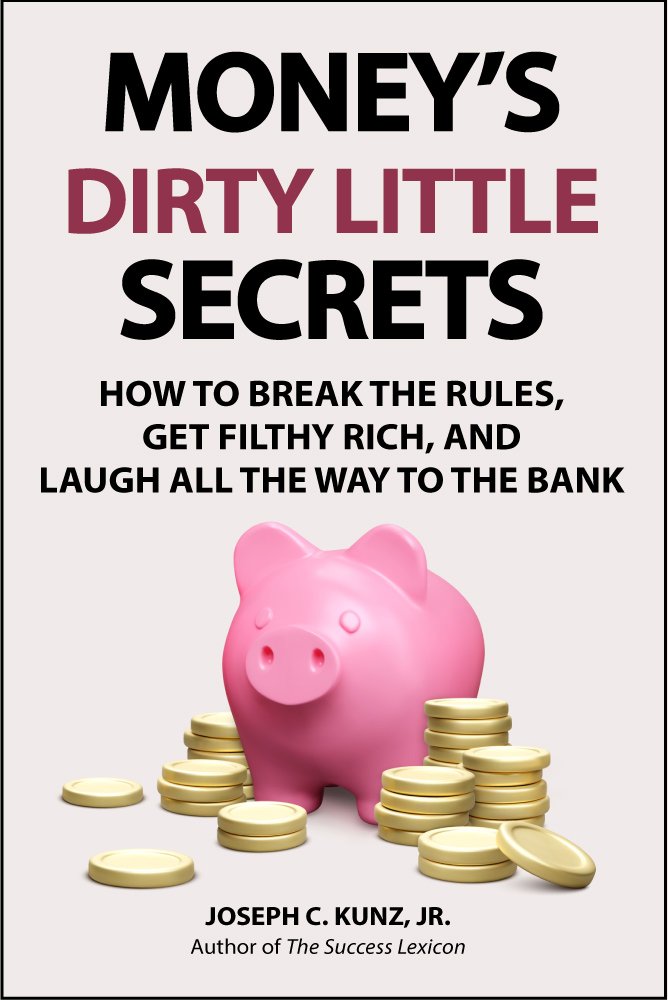
I didn’t write Money’s Dirty Little Secrets to entertain you—I wrote it because I was tired of watching people waste their lives stuck in a rigged system.
Every word in this book comes from my own fight to break free from the paycheck trap, to build systems that worked harder than I did, and to finally stop apologizing for wanting real wealth.
This isn’t theory. It’s scars, risks, and hard-won truths poured onto the page so you don’t waste decades learning the way I had to.
I put my heart and soul into this book because I know what it’s like to wonder if you’ll ever get ahead—and I know the way out.
Get your copy of Money’s Dirty Little Secrets and start building wealth with clarity, grit, and strategy—before another year slips away.