Writers Who Guide My Work
A look at the literary voices that shape your thinking—writers who bring clarity, conviction, and courage to the page. —Joseph C. Kunz, Jr.
The Thinkers Who Help Me Speak with Clarity, Conviction, and Grace
By Joseph C. Kunz, Jr.
Synopsis
This essay reflects on the writers who shaped not just how Joseph C. Kunz, Jr. writes—but how he thinks, lives, and speaks with conviction. These voices share a common thread: they refuse noise in favor of clarity, fashion in favor of truth, and popularity in favor of moral courage.
Drawing from historians, poets, cultural critics, and Christian thinkers, Writers Who Guide My Work traces a literary lineage rooted in faith, responsibility, and reverence for what endures. These men did not invent new values—they articulated old ones with precision and backbone. Their work is a reminder that words still matter, that tradition still instructs, and that clarity is an act of courage in an age that rewards confusion.
These men helped me find the words for the truths I already believed. They didn’t shape my values—they gave them clarity and strength. —JCK
I. Introduction
I didn’t set out to become a writer. I set out to live a meaningful life—rooted in faith, grounded in family, and built through hard work and personal responsibility. But somewhere along the way, I realized that living well wasn’t enough. These values needed to be spoken—and more importantly, passed on.
That’s where writing came in. And while I’ve forged my own path, I’ve found encouragement, challenge, and clarity in the work of a few key writers who walk ahead of me.
These men don’t all write in the same style or tone—but each of them has helped shape the way I think, write, and live. They remind me that it’s possible to speak boldly and humbly, to defend the truth without losing grace, and to build a life that matters in both public and private.
II. Here are a few of the writers who guide my work:
1. Victor Davis Hanson
Few thinkers speak as clearly—and with as much historical weight—about the collapse of Western culture and the quiet dignity of the American citizen. A farmer, historian, and patriot, Hanson embodies what I admire most: conviction without pretense, truth without apology. He sees the cultural rot, but doesn’t just diagnose it—he traces it to forgotten virtues. His writing reminds me that it’s not “elitist” to defend Western civilization—it’s essential. He gives voice to those who still believe in the old ways, and aren’t ashamed of it.
Freedom is not a natural state. It must be taught, guarded, and earned. —Victor Davis Hanson
2. Anthony Esolen
A poet and scholar who speaks in beautifully structured prose, Esolen challenges the cultural decay not with rage, but with reverence. He offers a vision of Christian culture that isn’t nostalgic—it’s noble. His love of beauty, truth, and tradition reminds me that culture isn’t something you watch—it’s something you live. He has helped me see how literature, education, family life, and worship are all connected by the same thread: the cultivation of the soul.
The revolution has no children. Christian culture raises them. —Anthony Esolen
3. David Mamet
Mamet writes like a man who finally stopped pretending—and started telling the truth. After decades inside the liberal establishment, he pulled back the curtain and spoke plainly about the lies, the illusions, and the moral rot he once ignored. His essays and books slice through polite cowardice with clarity and guts. He reminds me that walking away from groupthink isn’t betrayal—it’s integrity. Mamet teaches that clarity follows courage, and that tradition, capitalism, and faith aren’t crutches—they’re anchors.
Liberalism is a religion. It has its own dogma, and facts are irrelevant to it. —David Mamet
4. Cal Thomas
A calm, consistent voice in American cultural commentary, Cal Thomas has shown that you can speak the truth in love without losing your edge. His wisdom doesn’t shout—it resonates. He has spent decades encouraging Christians to engage the culture not with bitterness, but with integrity. What I value most is his steadiness—his refusal to chase trends, abandon his values, or water down the truth for popularity. He proves that you can speak with clarity and humility.
Principle doesn’t change because the culture does. —Cal Thomas
5. Allan C. Carlson
Carlson writes with insight about something I care deeply about but rarely see discussed: the foundational role of the family in shaping culture and economics. His work has influenced how I think about legacy, marriage, and what it really means to build a civilization from the inside out. He understands that strong families are not just a moral preference—they are the bedrock of a free and functioning society. His writing gives intellectual and historical depth to truths I’ve long believed intuitively.
The natural family is not a lifestyle choice. It is the foundation of a free society. —Allan C. Carlson
6. C.S. Lewis
Though not a political commentator, Lewis continues to influence everything I write. His ability to speak eternal truths in ordinary language inspires me to write not just for the moment, but for the long game. He reminds me that clarity, grace, and courage are always in style—and that the real battle is always spiritual before it is political. His work keeps me grounded in what really matters: not winning arguments, but winning souls. His writing is proof that timeless truths, well told, never lose their relevance.
Courage is not simply one of the virtues, but the form of every virtue at the testing point. —C.S. Lewis
III. Conclusion: Why I Share This List
I don’t pretend to match the accomplishments of these men. But I do try to follow their example: to write what’s true, live what I write, and leave something behind that will outlast me.
My goal isn’t to impress. It’s to encourage—to help the quiet majority find their footing again, to inspire younger generations to think clearly and live boldly, and to offer a steady voice in a noisy world.
Each of these writers has helped shape my convictions, sharpen my voice, and deepen my sense of purpose. They remind me that the written word still matters—and that truth, spoken in season, can build things that last. If my work reflects even a fraction of their influence, I’ll consider that a success.
When I needed guidance, I didn’t look to trends—I looked to writers who had the courage to speak timeless truth with humility and conviction. —JCK
Related Essays: For Those Who Believe Words Can Shape a Life
If this essay spoke to your love of writers and ideas, these will take you further.
See how seemingly random choices, lessons, and struggles come together to reveal a bigger pattern and purpose.
2. Writing from the Inside Out
Why the most powerful writing—and living—comes not from theory but from hard-earned personal truths.
Reader Comment: This essay reminded me that authenticity matters more than polish—it hit me right where I needed it.
Related Book: Every Writer I Admire Taught Me This: Grace Is the Real Strength
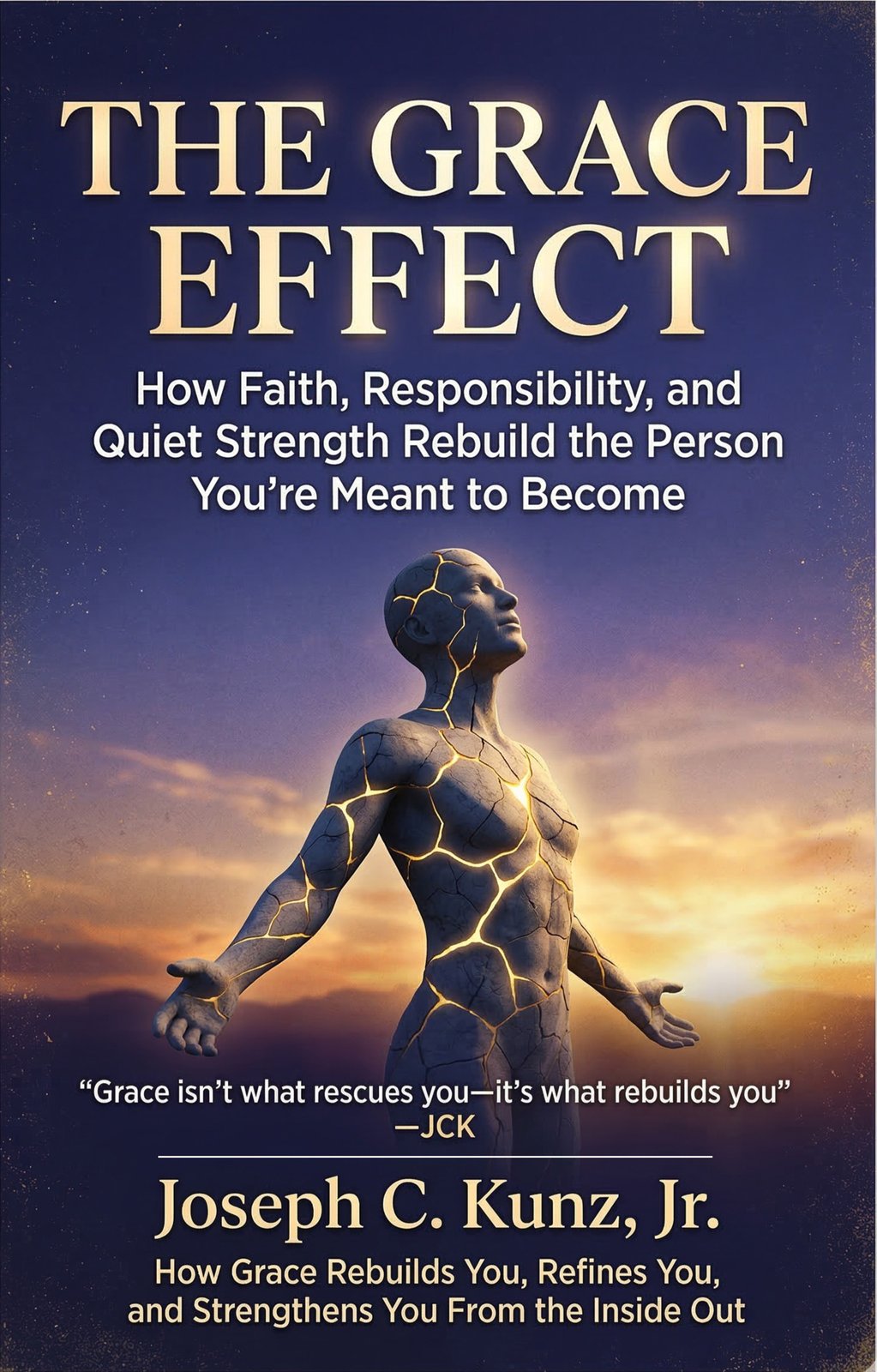
The Grace Effect
The voices that shaped me didn’t hand me comfort—they handed me conviction.
They reminded me that if you want to build something that lasts, you need more than skill or ambition.
You need grace—the steady strength that keeps you standing when everything else falls apart.
That’s why I wrote The Grace Effect. It’s not a book of pretty words.
It’s my blood, my scars, and my gratitude poured onto the page for anyone who needs proof that grace is the difference between breaking down and breaking through.
Get your copy of The Grace Effect and let it remind you, the way those writers reminded me, that the quiet force of grace will always outlast noise, fear, and doubt.
Coming Soon.