When the Human Heart Becomes a Political Problem
When a system fears normal life, it will eventually call the human heart a problem to be managed. —Joseph C. Kunz, Jr.
How Systems Learn to Fear Normal Life
By Joseph C. Kunz, Jr.
Synopsis
This isn’t an essay about nostalgia, partisan outrage, or pretending that every old habit was wise and every new idea is corrupt. In this essay, Joseph C. Kunz, Jr. argues that a culture crosses a dangerous line when it stops honoring the normal needs of the human heart—faith, family, belonging, identity, responsibility, work, order, and love—and begins treating them as problems to be managed, corrected, or redefined by institutions.
Kunz makes the case that systems detached from truth do not merely govern public behavior; they eventually reach inward. They begin to see the family as competition, faith as resistance, fatherhood as suspicion, motherhood as limitation, children as raw material, independence as disobedience, and moral clarity as a threat. Once that happens, normal life itself becomes political.
The conclusion is simple: when the human heart becomes a political problem, the goal is no longer freedom, order, or human flourishing. The goal is control. And the only real answer is not louder outrage, but stronger formation—families, fathers, mothers, believers, builders, and citizens who become sturdy enough to carry reality again.
The more a system loses faith in truth, the more it tries to govern the human soul. —JCK
I. Introduction: When Normal Life Becomes Suspicious
A healthy civilization does not fear normal life.
It does not treat the family as a rival institution. It does not treat faith as a psychological defect. It does not treat motherhood as a trap, fatherhood as a threat, children as political territory, or human nature as raw material waiting to be redesigned.
A healthy civilization understands something simple: people are not machines to be programmed. They are not theories to be tested. They are not ideological projects. They are souls, embodied creatures, moral beings, sons and daughters, husbands and wives, fathers and mothers, workers and neighbors, sinners and strugglers, builders and heirs.
They need love.
They need order.
They need belonging.
They need truth.
They need someone strong enough to tell them no, someone faithful enough to stay, and something higher than appetite to answer to.
But systems that drift from truth eventually become suspicious of those needs. They stop seeing them as part of the natural architecture of human life and begin treating them as obstacles to be managed.
That is when the human heart becomes a political problem.
And once that happens, nothing remains private for long.
II. The System Cannot Tolerate What It Cannot Control
Every system has limits. A healthy system knows this. A disordered system denies it.
Government has a role. Schools have a role. Law has a role. Institutions have a role. But none of them can replace the inner structures that make a life humane: conscience, family, faith, duty, discipline, affection, loyalty, and self-government.
When those inner structures weaken, institutions expand.
That expansion often begins with good language. Protection. Inclusion. Progress. Safety. Equality. Compassion. Fairness. But over time, when detached from truth, these words become tools. They stop describing moral goods and start justifying control.
The system does not say, “We want power over the family.”
It says, “We are protecting children.”
It does not say, “We distrust faith.”
It says, “We are resisting harm.”
It does not say, “We want to redefine reality.”
It says, “We are creating understanding.”
It does not say, “We are replacing self-government.”
It says, “We are building a more supportive environment.”
That is how control usually arrives.
Not with a boot at first.
With a brochure.
With a policy.
With a training module.
With a new vocabulary.
With a smiling expert explaining why ordinary people can no longer be trusted with ordinary life.
III. Human Nature Is Not a Threat
The human heart is not a policy error.
Children need mothers and fathers. Men need purpose. Women need honor. Families need order. Communities need trust. Workers need dignity. Citizens need freedom. Souls need God.
These are not extremist claims.
They are basic human realities.
But to a system that depends on redefinition, basic realities are dangerous because they stand outside the system’s authority. They do not need permission. They do not wait for institutional approval. They were not invented by committees, and they cannot be abolished by them.
A child’s need for stability does not disappear because adults find stability inconvenient.
A boy’s need for formation does not disappear because the culture is embarrassed by manhood.
A girl’s need for protection does not disappear because the culture confuses protection with oppression.
A family’s need for authority does not disappear because authority has been abused.
A soul’s need for God does not disappear because institutions prefer managed values to living faith.
This is where disorder becomes aggressive.
It cannot merely disagree with normal life. It must reinterpret it.
Fatherhood becomes patriarchy.
Motherhood becomes limitation.
Faith becomes intolerance.
Responsibility becomes judgment.
Self-government becomes repression.
Freedom becomes permission.
And confusion becomes compassion.
That is not moral advancement.
That is language being used as a crowbar against reality.
IV. When Children Become Territory
You can tell a great deal about a culture by how it talks about children.
A healthy culture sees children as gifts to be protected, formed, loved, disciplined, taught, and slowly prepared for freedom.
A disordered culture sees children as territory.
That shift is enormous.
Once children become territory, every institution wants access. Every ideology wants influence. Every movement wants early formation. Every faction understands that whoever shapes the child shapes the future.
This is why normal parental concern is so often treated with suspicion. A father asks what is being taught, and he is called hostile. A mother asks why adult confusion is being brought into childhood, and she is called fearful. Parents ask for transparency, and suddenly they are portrayed as dangerous.
That tells you something.
A system confident in truth does not fear parental questions.
A system serving children does not need to hide from parents.
A system that respects the family does not treat mothers and fathers as obstacles to enlightenment.
The issue is not whether schools, churches, communities, and institutions help form children. Of course they do. The issue is whether they do so in partnership with the family—or in competition with it.
That is the line.
When institutions begin to treat parents as barriers and children as access points, the human heart has already become political.
V. The Attack on Fatherhood Is an Attack on Order
A culture that weakens fatherhood should not be surprised when disorder grows.
This does not mean every father is good. Many are not. Some are absent. Some are weak. Some are selfish. Some abuse authority. Some abandon the very people they were called to protect.
But the failure of some fathers does not make fatherhood unnecessary.
It makes real fatherhood more necessary.
Fatherhood is not merely biological presence. It is not merely provision. It is not a title printed on a birth certificate. Fatherhood, at its best, supplies frame. It brings steadiness, protection, moral gravity, proportion, restraint, correction, and courage.
A father does not exist to dominate the home.
He exists to help govern it.
Not as a tyrant.
As a frame.
When that frame is missing, the household may still function, but it often lacks weight. It lacks center. It lacks the kind of quiet authority that teaches children the world is not built around their appetites.
And that is exactly why disordered systems dislike fatherhood.
Because fatherhood, rightly lived, creates limits the system did not authorize.
A serious father is hard to manipulate.
A serious father asks questions.
A serious father protects boundaries.
A serious father does not hand his children over to every passing theory wearing institutional perfume.
This is not nostalgia.
This is structure.
A society that mocks fathers will eventually beg systems to do what fathers once did.
And systems are very happy to accept the invitation.
VI. Faith Is the First Rival
Faith is always a problem for systems that want total authority.
Not decorative faith. Not soft faith. Not faith reduced to vague kindness, cultural sentiment, or holiday language.
Living faith.
Forming faith.
Faith that says truth stands above the self.
Faith that says man is accountable to God before he is accountable to fashion, appetite, office, tribe, party, or state.
Faith that teaches restraint when the culture teaches indulgence.
Faith that teaches forgiveness without pretending sin is harmless.
Faith that teaches dignity without turning desire into identity.
Faith that teaches love without surrendering truth.
That kind of faith cannot be easily managed.
It forms people from the inside. It gives them a source of authority outside the system. It teaches them to endure pressure, resist lies, govern appetite, and carry burdens no policy can carry for them.
That is why systems detached from truth do not merely dislike faith.
They must tame it.
They prefer faith that stays private, quiet, sentimental, therapeutic, and harmless. They can tolerate religion as decoration. They can tolerate ritual without obedience. They can tolerate values without surrender.
What they cannot tolerate is a formed conscience.
Because a formed conscience is not easily ruled.
VII. Compassion Without Truth Becomes Control
One of the most dangerous developments in any culture is compassion detached from truth.
Real compassion honors the person by telling the truth about reality.
False compassion protects feelings by hiding reality from the person.
That difference matters.
Real compassion does not mock suffering. It does not ignore confusion. It does not sneer at weakness. It does not treat struggling people as enemies.
But real compassion also does not lie.
It does not tell a person that every desire is identity. It does not tell a child that every feeling must be affirmed. It does not tell a family that boundaries are cruelty. It does not tell a society that consequences are oppression.
Compassion without truth eventually becomes manipulation.
It begins by saying, “We only want to help.”
Then it says, “You must use our language.”
Then it says, “You must affirm our conclusions.”
Then it says, “Your refusal is harm.”
At that point, compassion has stopped being mercy.
It has become enforcement.
That is one of the great tricks of disorder. It wraps control in moral language so that resistance looks cruel.
But kindness that requires a lie is not kindness.
It is surrender with flowers on the table.
VIII. The Political Use of Confusion
Confusion is not always accidental.
Sometimes confusion is useful.
A confused person is easier to lead away from his inheritance. A confused child is easier to influence. A confused citizen is easier to govern. A confused culture is easier to reshape.
This does not require everyone involved to be malicious. That is not how disorder usually works. Many people sincerely believe they are helping. Many are motivated by pity, fear, guilt, ambition, fashion, or the desire to be seen as good.
But sincerity does not make confusion harmless.
A man can sincerely remove load-bearing beams from a house because he wants an open floor plan. The roof does not care about his intentions.
Reality still answers.
When language becomes unstable, thought becomes unstable. When thought becomes unstable, judgment weakens. When judgment weakens, people become dependent on whoever claims the authority to interpret reality for them.
That is why clear language matters.
Man. Woman. Father. Mother. Child. Marriage. Duty. Freedom. Truth. Responsibility. Sin. Grace. Work. Consequence. Mercy. Authority. Love.
These words are not disposable.
They carry civilization.
When they are emptied, softened, inverted, or weaponized, people lose more than vocabulary.
They lose orientation.
And a disoriented people will eventually accept direction from almost anyone who promises relief.
IX. Why Normal People Start Going Silent
One of the clearest signs of cultural disorder is not just that strange ideas become public.
It is that normal people become quiet.
They stop asking obvious questions. They stop saying what they know. They stop trusting their own judgment. They start calculating every sentence before speaking it. They look around the room before naming reality.
That silence is not consent.
Often, it is exhaustion.
Or fear.
Or prudence.
Or the learned habit of living under soft intimidation.
When enough normal people go silent, disorder begins to look stronger than it is. Institutions mistake silence for agreement. Activists mistake fatigue for surrender. Cowards mistake caution for conviction.
But beneath the silence, reality remains.
Parents still know when something feels wrong.
Fathers still feel the instinct to protect.
Mothers still recognize when childhood is being invaded.
Workers still know when competence is being replaced by ideology.
Believers still know when faith is being domesticated.
Citizens still know when freedom is being redefined into permission.
The question is not whether people see it.
Many do.
The question is whether enough people become strong enough to say so.
X. The Answer Is Formation, Not Mere Outrage
Outrage is easy.
Formation is harder.
Outrage reacts. Formation builds.
Outrage can expose a lie for a moment. Formation creates people who can resist lies for a lifetime.
That is why the answer cannot be only political. Politics matters. Law matters. School boards matter. Elections matter. Policies matter. Institutional leadership matters.
But none of those can replace formation.
A weak people will eventually lose whatever political victories they win.
A confused people will eventually surrender whatever rights they still possess.
A disordered people will eventually invite control because freedom without inner structure becomes frightening.
That is why the real work begins closer to home.
Rebuild the household.
Strengthen the father.
Honor the mother.
Protect childhood.
Teach self-government.
Recover worship.
Tell the truth.
Use clear language.
Build competence.
Practice courage in small places before demanding it in large ones.
The culture does not need more theatrical outrage from people who cannot govern their own appetites, homes, words, money, time, or attention.
It needs formed people.
Sturdy people.
Faithful people.
People who can carry reality without asking permission from the age.
XI. Conclusion: Normal Life Must Be Defended Because Normal Life Is Not Small
Normal life is not small.
Marriage is not small. Raising children is not small. Teaching a boy self-command is not small. Teaching a girl dignity is not small. Building a household is not small. Working honestly is not small. Worshiping God is not small. Telling the truth in a confused age is not small.
These are not private hobbies.
They are civilizational acts.
That is why systems that want control eventually reach for them. They understand, sometimes better than ordinary people do, that the future is formed in the hidden places: the nursery, the dinner table, the classroom, the church pew, the job site, the father’s correction, the mother’s prayer, the habits no one applauds, and the truths a family refuses to surrender.
When the human heart becomes a political problem, the goal is no longer human flourishing.
The goal is management.
And the answer is not to become frantic.
The answer is to become formed.
Build the kind of life that makes lies less powerful. Build the kind of household that makes confusion less persuasive. Build the kind of faith that does not collapse under pressure. Build the kind of children who know who they are before the world starts selling them costumes. Build the kind of courage that can say no without hatred and yes without cowardice.
Because normal life is not the enemy of freedom.
It is where freedom learns how to live.
A people who cannot defend normal life will eventually be governed by those who promise to redefine it for them. —JCK
Related Essays: For Those Who Refuse to Hand Their Lives Over
If this essay hit close to home, these go deeper into the same fight—the quiet battle between formation and control, truth and confusion, and the kind of life that still holds under pressure.
1. When Reality Gets Called Naive
A clear-eyed look at how cultures avoid truth by mocking clarity and relabeling reality instead of confronting it.
Reader Comment: This essay put words to something I’ve seen for years—how obvious truths are dismissed so people don’t have to deal with them.
2. Nothing Load-Bearing Is Built in Public
A serious reminder that strong lives, families, and institutions are formed in private long before they are visible in public.
Reader Comment: This one made me realize that most of what matters in life is built where no one is watching.
What the world admires in public is usually the late fruit of years of unseen discipline, private formation, and quiet fidelity built where no one was watching. —JCK
Related Book: This Is the Foundation You’re Standing On
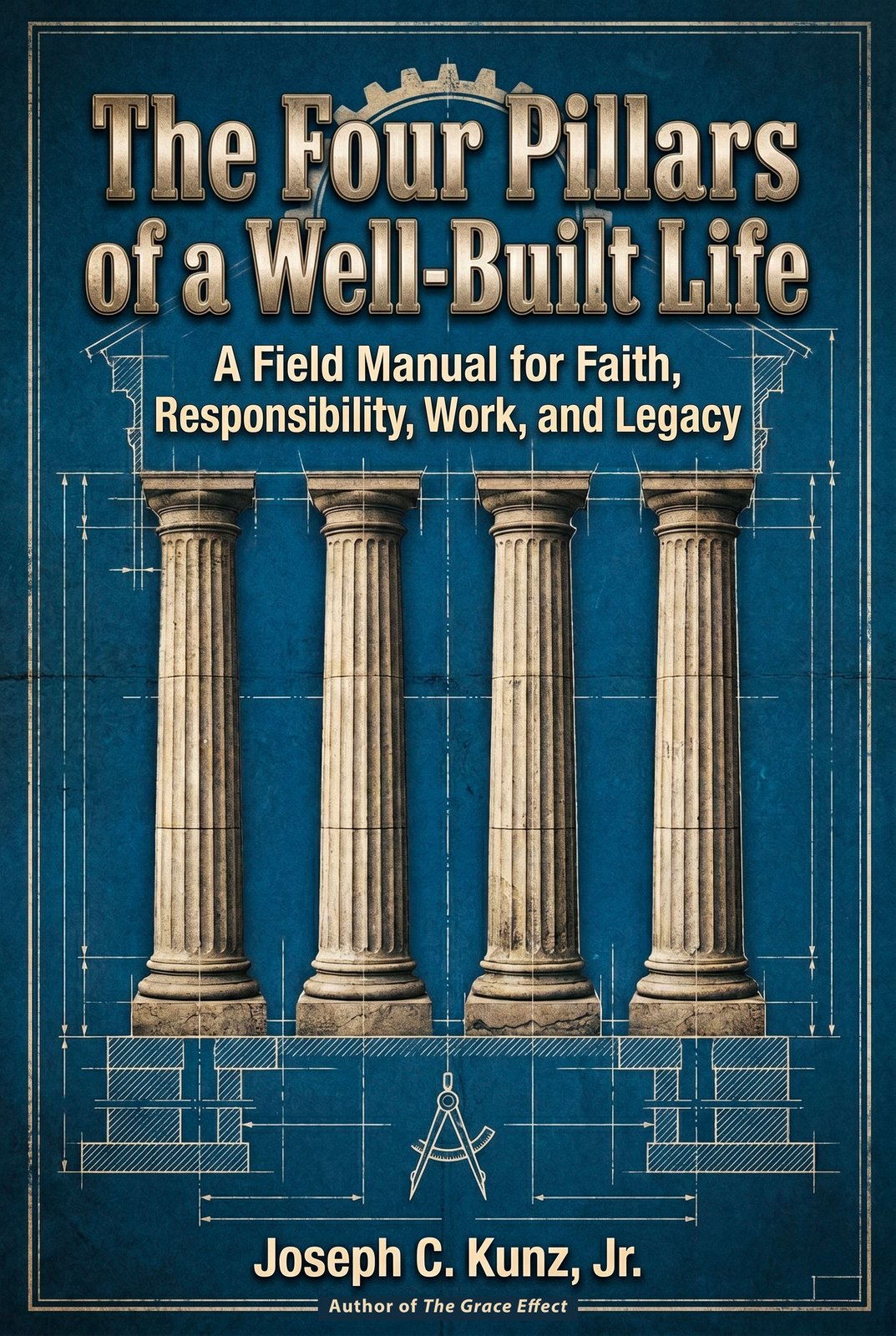
The Four Pillars of a Well-Built Life
A culture does not begin to treat the human heart as a problem by accident.
It happens when people lose their footing.
When truth becomes negotiable.
When responsibility becomes optional.
When work loses meaning.
When legacy stops mattering.
That is when systems step in to do what formed people once did for themselves.
The Four Pillars of a Well-Built Life is not a theory book. It is a framework for people who are done drifting and ready to build something that holds.
Faith. Responsibility. Work and Wealth. Legacy.
These are not abstract ideas. They are the load-bearing structures of a real life—one that can withstand pressure, resist confusion, raise strong children, build meaningful work, and leave something behind that matters.
This book is for people who are tired of watching normal life get redefined, weakened, or handed over.
It is for builders.
For fathers who want to lead with strength and clarity.
For mothers who refuse to surrender the formation of their children.
For individuals who want to govern themselves instead of being managed.
For anyone who knows, deep down, that life is meant to be built—not negotiated away.
Because when the human heart becomes a political problem, the answer is not louder arguments.
The answer is stronger people.
And stronger people are built—not declared.
The Four Pillars of a Well-Built Life
Being Built to Hold