Standing Firm in a Shifting World: 10 Books Every Small-“c” Conservative Should Read
A handpicked guide to ten timeless works that reveal how faith, virtue, and disciplined gratitude form the moral backbone of true conservatism—and why standing firm in your convictions” is the most radical act of leadership in a shifting world. —Joseph C. Kunz, Jr.
Timeless Ideas For Those Who Believe Character Still Matters, Truth Still Exists, And Freedom Is Worth Defending
By Joseph C. Kunz, Jr.
Synopsis
In a culture that treats “progress” as whatever is newest, being a small-“c” conservative is an act of moral resistance: conserving what has proven true about human nature, virtue, freedom, and the duties that make a civilization worth inheriting. In this essay, Joseph C. Kunz, Jr. argues that real conservatism isn’t loud or tribal—it’s grounded in first principles: faith, restraint, gratitude, and character. These aren’t political talking points; they’re the load-bearing beams of ordered liberty.
Kunz offers a handpicked list of ten timeless books—voices like Russell Kirk, C.S. Lewis, Thomas Sowell, Roger Scruton, Burke, Hayek, and others—that expose the lies behind utopian thinking and remind readers why freedom collapses when virtue is optional. Each selection is paired with a clear takeaway and a builder’s “why it matters” lens. Because in a shifting world, the most radical leadership isn’t theatrics—it’s standing firm, defending truth, and living with disciplined gratitude.
Conviction doesn’t shout—it stands its ground. —JCK
I. Introduction: What It Means to Be a Small-“c” Conservative
To be a small-“c” conservative isn’t about party politics—it’s about posture. It’s about standing firm in a world that constantly shifts its definitions of truth, goodness, and beauty. It’s about believing that wisdom is older than we are—and that freedom, without virtue, collapses.
The thinkers in this list didn’t chase cultural approval. They sought clarity, not comfort. They knew that strong societies are built by strong individuals—those who live by principles, not polls.
These books aren’t meant to make you nostalgic; they’re meant to make you courageous. They remind us that moral clarity is an act of rebellion in an age of moral confusion.
Note
Some of the links on this page may be affiliate links. This means I may earn a small commission—at no cost to you—if you make a purchase. I only recommend books and authors I personally believe in. And I believe in practicing what I preach: using every honest tool available to build freedom, value, and long-term sustainability.
Where to Begin
If you’re new to these ideas, start with The Abolition of Man by C.S. Lewis. It’s short, sharp, and timeless—a moral x-ray of modern culture that exposes what happens when truth becomes negotiable. Lewis doesn’t shout; he dissects. And when you finish, you’ll see clearly why objective truth isn’t just a belief system—it’s the backbone of civilization.
Then move to How to Be a Conservative by Roger Scruton. It builds beautifully on Lewis’s warning by showing you what to do next—how to live gratefully, defend what’s worth keeping, and rebuild the moral and cultural foundations that make freedom possible. It’s conservatism not as politics, but as a way of life rooted in beauty, duty, and gratitude.
II. The Reading List
1. The Conservative Mind by Russell Kirk
Synopsis: Kirk traces the moral and philosophical roots of conservatism from Edmund Burke through the 20th century, showing that true conservatism isn’t a political fad but a moral inheritance grounded in faith, custom, and order. He explains how liberty survives only when anchored to virtue and how culture collapses when moral imagination dies.
My Take: This book built the intellectual backbone of modern American conservatism. Kirk reminds us that freedom without moral order becomes chaos—and that civilization depends on gratitude, restraint, and reverence for what endures.
Tradition isn’t nostalgia—it’s the guardrail that keeps freedom from driving off the cliff. —Joseph C. Kunz Jr., The Grace Effect
2. The Abolition of Man by C.S. Lewis
Synopsis: Lewis dismantles the illusion that morality can be reinvented by emotion or preference. He warns that when a culture teaches children to mock virtue and call it progress, it produces “men without chests”—souls detached from truth.
My Take: Lewis wrote a short book with nuclear impact. He saw the decay of objective truth long before our headlines made it obvious. Reading it now feels like opening a time capsule that predicted today’s confusion.
If truth becomes optional, freedom becomes impossible. —Joseph C. Kunz Jr., The Grace Effect
3. A Conflict of Visions by Thomas Sowell
Synopsis: Sowell reveals that nearly every political and cultural battle flows from two opposing visions of human nature: one sees people as limited and in need of moral structure; the other imagines perfectibility through social engineering.
My Take: This book taught me that disagreement isn’t always about facts—it’s about foundational beliefs. Sowell doesn’t tell you what to think; he shows you how to think, and that’s what makes it transformative.
Understanding human nature is the beginning of wisdom—and the end of political naivety. —Joseph C. Kunz Jr., The Grace Effect
4. How to Be a Conservative by Roger Scruton
Synopsis: Scruton’s elegant defense of conservatism celebrates the beauty of home, duty, and gratitude. He argues that love of what we already possess—family, nation, faith—is the moral antidote to a restless culture obsessed with tearing things down.
My Take: Scruton writes with intellect and tenderness. He proves that conservatism is not anger but affection—a philosophy rooted in belonging and beauty. Reading him feels like finding calm reason amid cultural noise.
Real conservatism isn’t loud—it’s rooted, grateful, and quietly courageous. —Joseph C. Kunz Jr., The Grace Effect
5. God and Man at Yale by William F. Buckley Jr.
Synopsis: Buckley’s fearless exposé of moral decline in academia argues that universities once charged with teaching truth had begun worshipping relativism. It’s part manifesto, part warning—and it sparked an entire movement.
My Take: Imagine being 25 and standing alone against the most powerful academic institutions in the country. That was Buckley. He proved that one voice of conviction can ignite decades of change.
Moral courage often starts as one man refusing to nod along. —Joseph C. Kunz Jr., The Grace Effect
6. The Road to Serfdom by Friedrich Hayek
Synopsis: Written during World War II, Hayek’s masterpiece exposes how even well-meaning central planners inevitably trade liberty for control. He shows that once the state assumes responsibility for all outcomes, individual freedom dies quietly in bureaucracy’s shadow.
My Take: Hayek armed generations with the economic and moral reasoning to resist tyranny dressed as compassion. His warning still matters because the temptation to “let government fix it” never goes away.
The road to tyranny is always paved with promises of fairness. —Joseph C. Kunz Jr., The Grace Effect
7. Witness by Whittaker Chambers
Synopsis: Part spy thriller, part spiritual confession, Witness recounts Chambers’s break from communism and his dramatic testimony against Alger Hiss. It’s the story of a man who chose conscience over comfort and faith over ideology.
My Take: Few books capture moral awakening with such gravity. Chambers reminds us that redemption begins when we stop lying—to ourselves and to the world—and accept that truth costs everything worth having.
When the soul wakes up, the lies lose their power. —Joseph C. Kunz Jr., The Grace Effect
8. Reflections on the Revolution in France by Edmund Burke
Synopsis: Burke’s response to the French Revolution defends order, tradition, and moral restraint against the destructive zeal of ideology. He argues that real progress is organic—built on inherited wisdom, not political passion.
My Take: Burke is the ancestor of every serious conservative thinker. His insights feel as modern as ever: that societies fall apart when they trade humility for hubris and wisdom for slogans.
Every generation inherits both a gift and a duty—preserve what’s proven, and protect it from fools. —Joseph C. Kunz Jr., The Grace Effect
9. The Vision of the Anointed by Thomas Sowell
Synopsis: Sowell dissects how intellectual elites substitute emotion for evidence and power for principle. He exposes how moral vanity allows bad ideas to survive long after they fail in practice.
My Take: This is Sowell at his sharpest—part logic, part lightning. He dismantles the myth that compassion and competence are the same thing. It’s uncomfortable reading for anyone addicted to virtue signaling.
The louder someone proclaims their virtue, the more you should check their math. —Joseph C. Kunz Jr., The Grace Effect
10. Ideas Have Consequences by Richard Weaver
Synopsis: Weaver traces the cultural collapse of the West to the moment truth became subjective and language lost its anchor. He warns that once moral reality is denied, civilization unravels from the inside out.
My Take: This is philosophy written like poetry—haunting, profound, prophetic. Weaver forces us to confront the spiritual dimension of cultural decay and challenges us to rebuild from first principles.
Civilizations don’t fall—they fade when truth stops mattering. —Joseph C. Kunz Jr., The Grace Effect
III. Conclusion: The Courage to Stand Grateful
Conservatism at its best isn’t about fear—it’s about gratitude. Gratitude for the moral order, for the freedom that flows from it, and for the duty to preserve it.
If you believe that character is the highest form of leadership and truth the ultimate act of rebellion, these books will remind you why your convictions matter—and why standing firm is the most radical thing you can do in a shifting world.
Gratitude, not grievance, is the heartbeat of real freedom. —JCK
Related Essays: For Those Ready to Separate Myths from Reality
If this essay stirred your sense of duty, these two will show you how to put those convictions to work in your daily life.
1. Faith First: The Real Foundation of Conservative Principles
Without faith, conservatism drifts into nostalgia or raw power; with it, principles gain moral clarity and strength.
Reader Comment: This one made me stop scrolling and start thinking. It reminded me that conviction without faith is just pride with better grammar.
2. Why I Trust Principles, Not Power
Lasting security comes from timeless truths, not shifting authorities.
Quote: Power fades. Principles compound. —JCK
Related Book: The Moral Compass Still Points True
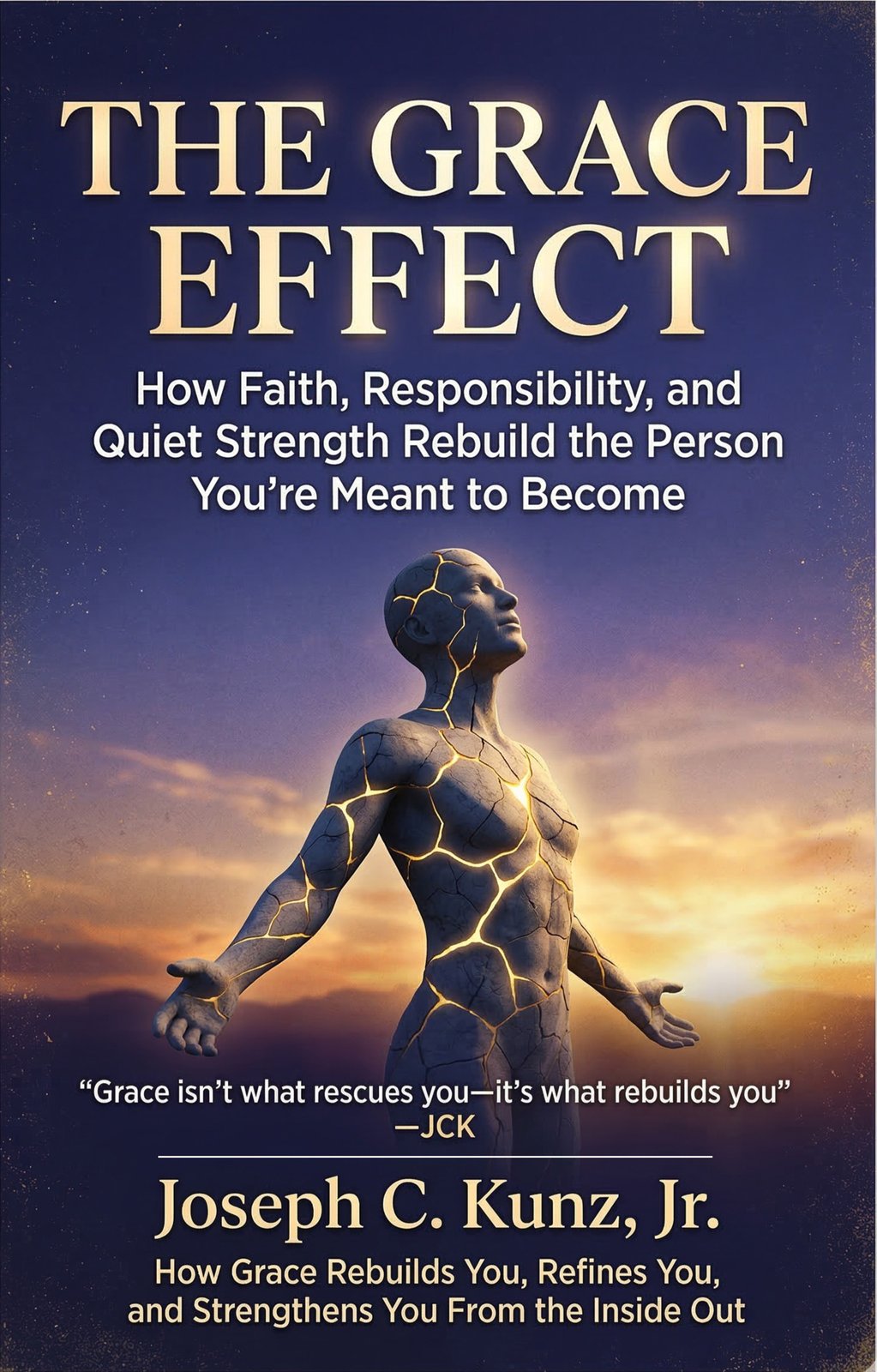
We don’t need louder outrage—we need deeper roots. The Grace Effect is my unapologetic blueprint for rebuilding moral strength in a culture that’s lost its center. It’s about how faith, forgiveness, and personal courage restore balance where politics can’t.
If you’ve ever felt like the world has lost its moral bearings, this book will help you find yours again.
Read more in The Grace Effect.
Coming Soon.