Say What You Mean — Or Someone Else Will Say It for You
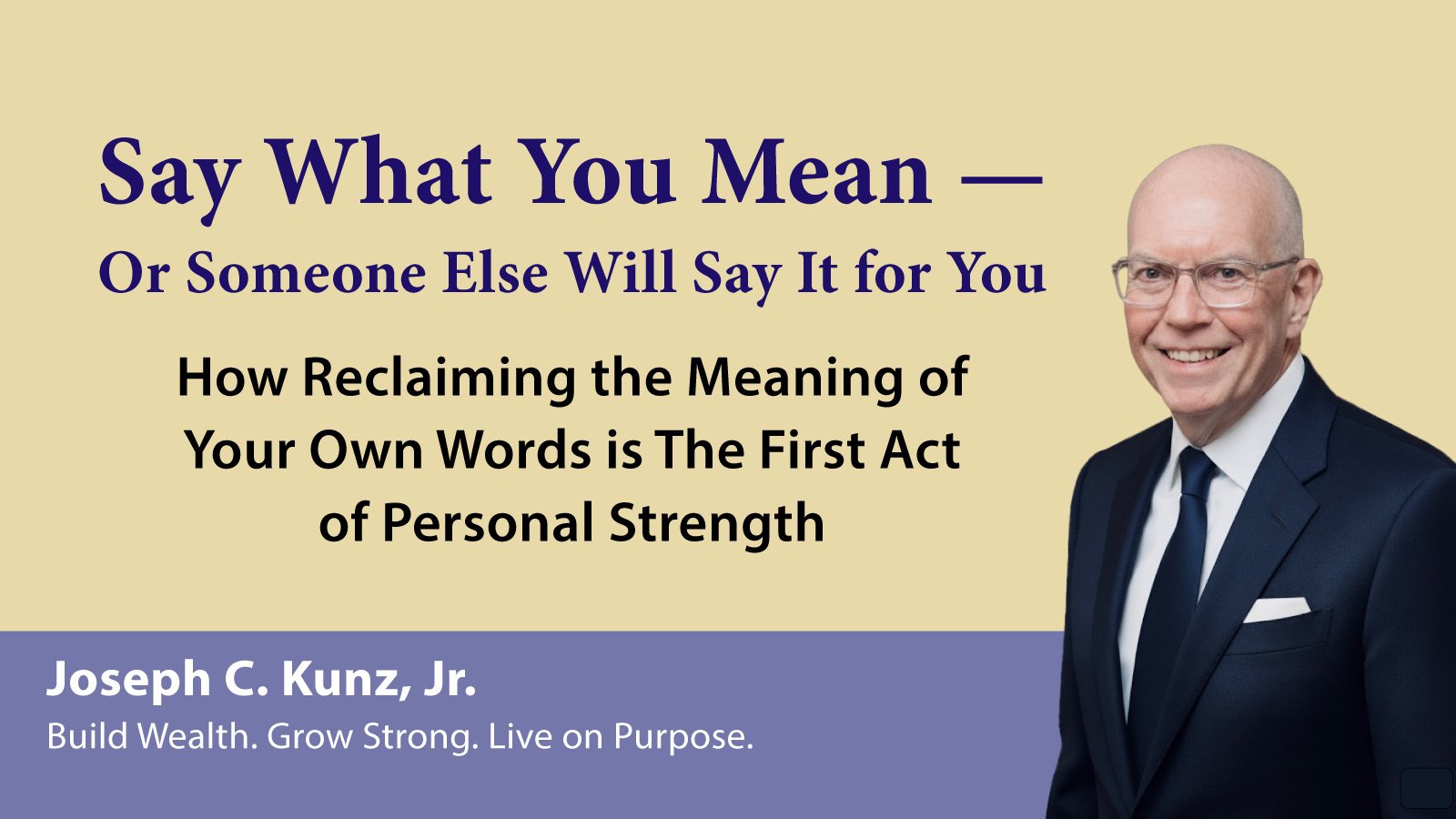
You don’t lose your freedom all at once. You lose it one undefined word at a time. —Joseph C. Kunz, Jr.
How Reclaiming the Meaning of Your Own Words is The First Act of Personal Strength
By Joseph C. Kunz, Jr.
Synopsis
Most people don’t get taken off course by one big mistake—they get taken off course by vague thinking. In this essay, Joseph C. Kunz, Jr. argues that words like success, freedom, responsibility, faith, and purpose aren’t inspirational decorations—they’re steering wheels. If you don’t define them, you’ll borrow definitions from culture, slogans, algorithms, and other people’s agendas—and your life will start drifting without you noticing.
Say What You Mean — Or Someone Else Will Say It for You is a call to reclaim your personal dictionary as an act of strength: clarify the words that govern your choices, name the costs and boundaries, and teach those definitions forward as legacy. Because you don’t lose your freedom all at once—you lose it one undefined word at a time.
You don’t lose your freedom all at once—you lose it one undefined word at a time. —JCK
I. Introduction: The Silent Collapse That Happens in Our Thinking
Most people aren’t struggling because they lack opportunities, intelligence, or motivation. They’re struggling because they no longer understand the words they use to describe their own lives.
That might sound dramatic—until you look at how people talk.
Ask ten people what success means. You’ll get twelve different answers. Ask what freedom means. Or happiness. Or purpose. Or discipline. Or faith. Or responsibility.
Watch what happens. Their eyes drift. Their sentences get vague. They search the air for ideas they’ve never actually defined.
Most people are walking around using the language of a life they’ve never taken the time to articulate. And because their language is vague, their direction is vague. Because their definitions are borrowed, their lives are borrowed.
No wonder so many people feel lost.
No wonder so many feel unfocused, anxious, or easily manipulated.
A person who doesn’t define their own words is a person who can be steered — socially, politically, emotionally, financially, spiritually—without ever realizing it.
That is the real crisis of modern thinking.
Not ignorance. Not laziness. Not even fear.
Vagueness. A fog of language so thick that people can no longer see where they’re going or why.
The world says “just live your truth,” “follow your passion,” “think outside the box,” and “be authentic.” And people repeat these slogans like they’re profound—without questioning the emptiness inside them.
But life doesn’t run on slogans. Life runs on definitions.
Your ability to build something meaningful—a family, a business, a career, a faith, a legacy — rests on whether you actually understand the vocabulary you’re using to guide your decisions.
Success does not start with inspiration. Success starts with definition.
II. Words Are Steering Wheels, Not Decorations
We treat language as if it’s optional—like it’s just a stylistic accessory to make our ideas sound better.
But language isn’t decoration. Language is direction.
Every choice you make stems from the definition of a word in your mind.
Your definitions shape:
• what you pursue
• what you avoid
• what you tolerate
• what you sacrifice
• what you fear
• what you desire
• what you admire
• what you reject
Here’s a brutal truth most people overlook:
Your life is simply your definitions made visible.
If your definition of success is vague, your life will drift. If your definition of freedom is childish, your choices will be reckless. If your definition of responsibility is distorted, your relationships will suffer. If your definition of happiness is fantasy, your expectations will destroy you.
Everything begins with the meanings inside your head.
And if you don’t choose those meanings intentionally, you inherit them by accident—from culture, from friends, from advertising, from politics, from social media, from wherever the loudest voice happens to be coming from that day.
This is why so many people feel like they’re living someone else’s life. Because they are.
They’re using someone else’s definitions.
III. The Danger of Borrowed Language (and Why It Weakens People)
The modern world runs on borrowed phrases—expressions people repeat as if they’re wise, but that collapse under the weight of real life.
You’ve heard all the favorites:
• Follow your passion.
• Live your truth.
• Find your balance.
• Speak your authenticity.
• Do what feels right.
• You do you.
• Think outside the box.
• Trust the universe.
These slogans spread because they’re easy to say. They feel empowering. They sound inspirational.
But they have one catastrophic flaw:
None of them have a stable meaning.
Ask people what “live your truth” means. Ask what “balance” means. Ask what “authentic” means.
Ten people. Ten different definitions. A phrase that means everything… means nothing.
Vague language produces vague lives. And vague lives produce confused people.
And confused people can be easily steered.
That’s why vague slogans get promoted everywhere—they dissolve responsibility, weaken conviction, and create citizens who don’t push back.
When you think vaguely, you live vaguely.
When you speak vaguely, you choose vaguely.
When you choose vaguely, you drift through life hoping things will magically “work out.”
It’s not that these phrases are inherently evil. It’s that they’re empty containers—and if you don’t define them, someone else will fill them for you.
This makes vague language dangerous, not motivational. Because the moment you let other people supply your definitions, you’ve lost control of your direction.
IV. The First Discipline of a Strong Life: Define Your Words
People want habits, discipline, courage, clarity, confidence, purpose—all the things that lead to a strong life.
But here’s the uncomfortable truth:
You cannot build a strong life on weak definitions.
Before you develop discipline, you must define what discipline is. Before you chase success, you must define what success means. Before you cultivate faith, you must define what faith requires. Before you take responsibility, you must define responsibility’s boundaries. Before you build a family, you must define what family is meant to be.
Definitions determine direction.
You cannot escape this. You can only decide whether you’ll define your words consciously—or absorb them unconsciously from a society that doesn’t share your values.
The strongest people you know—and the happiest—are not the ones with the most money, talent, or luck.
They are the ones with clear definitions.
When they say work, they know exactly what work demands. When they say commitment, they know exactly what commitment costs. When they say freedom, they know exactly what freedom requires. When they say “success,” they know exactly what success looks like in their life—not Instagram’s version, not Hollywood’s version, not their neighbor’s version.
Definition is the foundation of conviction. Conviction is the foundation of identity. Identity is the foundation of resilience. And resilience is the foundation of a life worth building.
It all starts with words.
V. Undefined Words Are How People Lose Control of Their Lives
Most people don’t realize how vulnerable they are to persuasion, marketing, emotional manipulation, and cultural pressure—simply because they don’t have firm definitions for the words they use.
If you don’t define your own:
• value system
• goals
• virtues
• priorities
• identity
• purpose
…someone else—or something else—will.
That “someone else” might be:
• the media
• a political agenda
• a corporation
• an influencer
• a college professor
• an algorithm
• a trend
• your peer group
Or even your own fears.
When you don’t define your words, everything sounds compelling. Everything feels convincing. Everything carries emotional weight.
You are swept into narratives you didn’t choose, expectations you didn’t question, and opinions you didn’t examine.
This is how people end up living lives that feel foreign to them.
They never chose—they repeated.
They never defined—they absorbed.
They never questioned—they complied.
Which leads to the most tragic outcome of all:
People begin to distrust themselves.
They feel lost not because they’re broken—but because they’re linguistically homeless.
Their inner vocabulary doesn’t anchor them. It drifts.
And so they drift.
VI. How to Reclaim Your Language (and Your Life)
This part is practical and powerful—and it aligns with everything I teach in my books.
If you want to reclaim your life, start by reclaiming your dictionary.
A. Identify the 10 most important words in your life.
Pick the ones that show up in your decisions:
• Success
• Responsibility
• Family
• Discipline
• Freedom
• Faith
• Work
• Wealth
• Purpose
• Happiness
These 10 words drive everything else.
B. Write down your personal definition for each one.
Not Google’s definition. Not society’s definition. Not your friend’s definition. Not the “culturally acceptable” definition.
Yours.
Define each word in one strong sentence—the kind you would stake your reputation on.
C. Add the cost.
Every real definition has a price. This is the part people avoid.
Success costs sacrifice. Freedom costs discipline. Family costs commitment. Faith costs humility. Responsibility costs discomfort.
If your definition doesn’t include the cost, it’s not a definition—it’s a wish.
D. Add a boundary.
What your definition includes is important. What it excludes is even more important.
Example: Responsibility means owning your choices—and not blaming other people. Faith means trusting God—and not twisting faith into an emotional excuse for passivity.
A definition without boundaries is a bucket without a bottom.
E. Reject any redefinition that weakens you.
If a new version of a word:
• removes accountability
• removes truth
• removes discipline
• removes faith
• removes effort
• removes agency It’s sabotage.
F. Teach your definitions to your children.
If you want to build a strong family, give them a strong vocabulary.
Don’t assume they know what responsibility, freedom, respect, or success mean. Define these words out loud. Repeat them. Model them.
Language is legacy.
VII. Why This Matters More Than Ever
We live in a time where almost every significant word is being stretched, distorted, softened, or re-engineered.
People aren’t fighting over policies—they’re fighting over definitions.
• What is a family?
• What is truth?
• What is freedom?
• What is respect?
• What is virtue?
• What is fairness?
• What is justice?
• What is authority?
• What is identity?
• What is responsibility?
The people who control the definitions eventually control the society.
But the people who control their own definitions control their lives—no matter what society does.
This is why clarity is now a moral obligation. A spiritual practice. An act of independence. A form of resistance. And a source of strength.
Defining your own vocabulary is not academic. It is not philosophical. It is not abstract.
It is survival.
VIII. Conclusion: Say What You Mean. Mean What You Say. Live What You Speak.
If you want to become strong, independent, faithful, grounded, resilient, and successful — start with the words coming out of your mouth.
Guard your vocabulary. Protect it. Sharpen it. Refine it. Own it.
Because the moment you lose control of your definitions, you lose control of your decisions. And when you lose control of your decisions, you lose control of your life.
Say what you mean—without apology. Mean what you say—without wavering. Live what you speak—without hesitation.
Strength begins with clarity. Clarity begins with definition. And definition begins with you. —JCK
Related Essays: For the Builder Who’s Done Letting Other People Do the Thinking
If this essay woke you up to how much language shapes your life, these will sharpen the edges even more.
1. Language as the First Battleground for Clarity
Weak words build weak lives; defending your definitions is the first act of true independence.
Reader Comment: This one made me realize I’d been speaking in slogans instead of convictions—and it honestly stung in the best way.
2. Don’t Outsource Your Thinking — Even to “Experts”
Real independence comes from sharpening your own judgment instead of blindly trusting authority.
Quote: The moment you start renting your opinions from other people, you start foreclosing on your own future. —JCK
Related Book: If You’re Done Letting the World Define You, Read This Next
Most people never build the life they want because they never build the vocabulary to guard it. They don’t lose their freedom in one big dramatic moment—they lose it in tiny ways, every time they let someone else define a word that should’ve belonged to them.
If that hit you in the chest… good. It means you’re waking up.
Because here’s the truth nobody likes to admit:
You can’t build a legacy with borrowed definitions. You can’t build conviction with borrowed language. You can’t build a life with someone else’s blueprint.
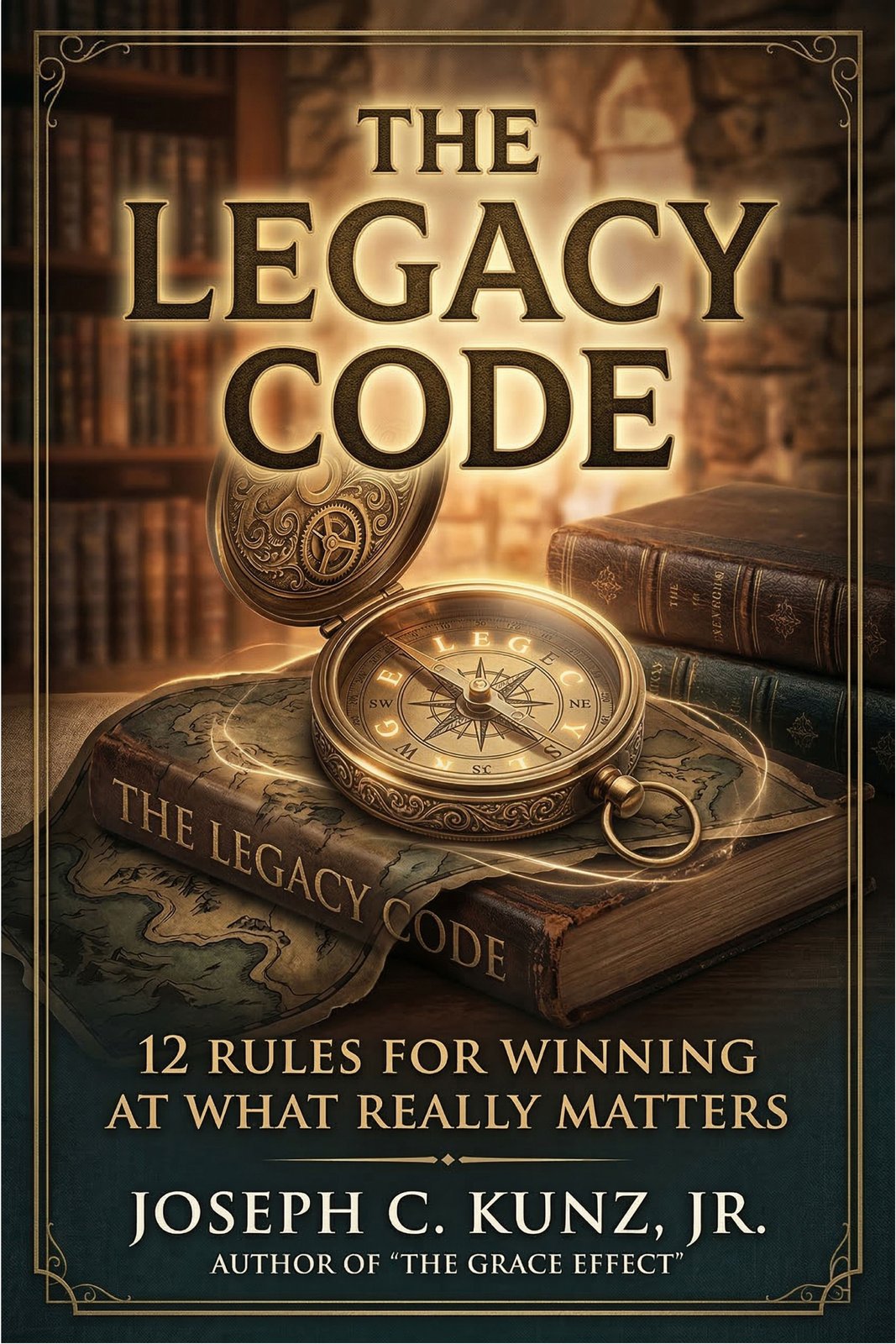
And that’s why I wrote The Legacy Code.
It’s not a “motivational” book. It’s not a pep talk. It’s a set of twelve non-negotiable rules that force you to confront the way you think, the way you choose, the way you speak, and the way you live.
Rules that sharpen the meaning of your words. Rules that strengthen the backbone you didn’t know was softening. Rules that remind you—loudly—that you are here to build something your children can stand on, not apologize for.
If you just read this essay and felt even an ounce of conviction, clarity, discomfort, or fire rising in your gut…then this is your moment to stop drifting and start defining the path forward.
Don’t wait for life to slap you awake. Don’t wait for circumstances to decide your future. Choose your rules. Choose your words. Choose your life.
Take the next step: Read The Legacy Code and start building the life you were meant to live. It’s not soft. It’s not polite. And it will not let you walk away unchanged.
Coming soon.
This is where your real clarity begins. This is where your real legacy starts.