Faith Gives Conservatism Its Moral Compass
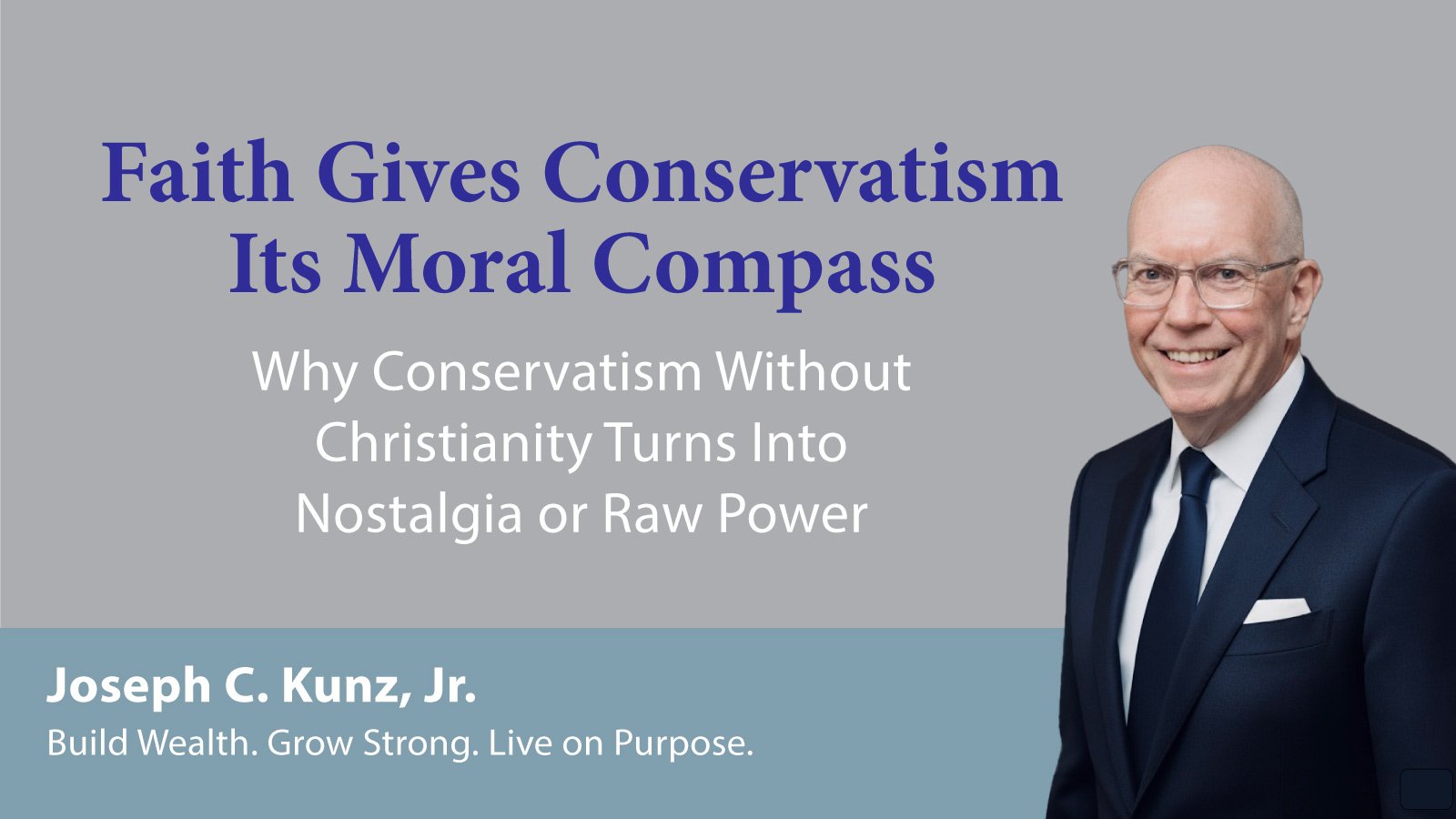
Conservatism without Christianity loses its anchor and drifts into nostalgia or raw power, but with faith it regains its true compass—defending family, liberty, life, and virtue. —Joseph C. Kunz, Jr.
Why Conservatism Without Christianity Turns Into Nostalgia or Raw Power
By Joseph C. Kunz, Jr.
Synopsis
This is not an essay about defending a political party, romanticizing the past, or reducing conservatism to slogans, policies, or electoral victories. In this essay, Joseph C. Kunz, Jr. confronts a deeper problem: what happens when conservatism loses the moral foundation that gives it meaning. He argues that without Christianity, conservatism does not become neutral—it becomes unmoored, drifting either into nostalgia for a past it no longer understands or into a pursuit of power detached from principle.
Kunz makes the case that Christianity provides the essential compass that conservatism cannot generate on its own. He shows how faith grounds the movement in four enduring realities—family as the foundation of society, liberty as ordered freedom, life as sacred, and virtue as the basis of self-government. Without these anchors, tradition becomes hollow, policy becomes reactive, and political victories become empty because they are no longer tied to a coherent moral vision. The essay also connects this drift to a broader cultural breakdown: when a movement forgets why it exists, it eventually begins to resemble what it opposes—loud, reactive, and driven more by emotion or power than by truth.
The conclusion is simple: conservatism without Christianity loses its direction and its purpose. But when rooted in faith, it regains clarity, strength, and the ability to build something worth preserving. A movement that remembers its moral center can do more than resist decline—it can restore what matters and pass it on with conviction.
Conservatism without Christianity is a ship with no captain—adrift, aimless, and bound to crash. —JCK
I. Introduction: Conservatism at a Crossroads
Conservatism is supposed to stand for more than “the good old days.” At its best, it defends truth, protects freedom, and preserves the things that let families and communities thrive. But when it loses its moral center, conservatism runs into two dead ends.
One is nostalgia—clinging to the past as if old customs alone will save us. The other is raw power—grabbing influence just to win, even if you forget what you’re fighting for. Neither builds anything worth handing down. Conservatism isn’t about museums or power plays. It’s about conserving what matters most.
II. Why Tradition Alone Isn’t Enough
Tradition is good. It connects us to the people who came before us. But tradition by itself won’t hold society together. Without something deeper, it turns into empty rituals and hollow slogans.
Think about it: you can have families who always gather for Sunday dinner. But if faith isn’t shaping those meals, it’s just a routine. The glue doesn’t last. The same is true in politics. Waving a flag or quoting the Founders doesn’t mean much if you’ve lost the moral conviction that gave those symbols their power in the first place.
Tradition without truth is nostalgia. And nostalgia never built anything that lasts.
III. Christianity Provides the Compass
What gives conservatism its direction is Christianity. Faith anchors tradition in something unchanging. It reminds us of what’s worth fighting for and why.
Here’s the compass Christianity provides:
• Family: More than a lifestyle choice. It’s the foundation of society. Faith elevates marriage and parenting from private decisions into public goods that keep communities stable.
• Liberty: Freedom isn’t “do whatever you want.” It’s the ability to do what’s right. Without that understanding, liberty collapses into chaos—and chaos always invites tyranny.
• Life: Every life is sacred. From the unborn to the elderly, life has value. Lose that conviction and conservatism becomes just another power game.
• Virtue: Rules alone can’t make people good. If citizens won’t govern themselves, the government will step in. Faith calls people to honesty, responsibility, courage, and sacrifice.
That’s the difference between conservatism with a spine and conservatism that drifts wherever the wind blows.
IV. Lessons from History and Everyday Life
America’s Founding. The Founders didn’t just appeal to tradition. They rooted liberty in “the laws of Nature and Nature’s God.” They built a system—what we call Americanism—an idea bigger than politics, one that only works if the people are moral and self-controlled. They knew that freedom without virtue eats itself alive.
Families. A family with faith passes down more than recipes or holiday habits. It passes down values. Kids learn duty, gratitude, and respect. When faith is missing, those same traditions become optional—and sooner or later, they disappear.
Politics. A conservative movement that focuses only on taxes, spending, or winning elections without talking about life, family, and virtue is playing a short game. It may score points, but it won’t change the culture. Eventually, it looks just like the progressivism it claims to resist.
V. Conclusion: Conservatism Without Christianity Is Lost
Here’s the hard truth: without Christianity, conservatism has no anchor. It shrinks into nostalgia—polishing old relics—or mutates into a fight for power with no higher goal. Either way, it loses the very things it’s supposed to protect.
With Christianity, conservatism knows what it’s conserving: family, liberty, life, and virtue. It’s not just about holding ground—it’s about building a future worth handing down. If conservatism forgets its compass, it’s finished. If it remembers, it can still lead.
Faith doesn’t just steady conservatism—it gives it a spine strong enough to defend truth against the world’s storms. —JCK
Related Essays: For Readers Who Know Convictions Come Before Comfort
If this essay hit home, these will dig even deeper.
1. The Best Inheritance Isn’t Money — It’s This
Why passing down values, principles, and faith matters more than leaving behind wealth.
Reader Comment: This essay reminded me that my kids need my example more than my bank account.
2. Don’t Outsource Your Thinking — Even to “Experts”
Learn why real leaders filter advice through faith, values, and personal responsibility instead of blindly following the crowd.
Related Book: If Conservatism Forgets Its Compass, It’s Finished
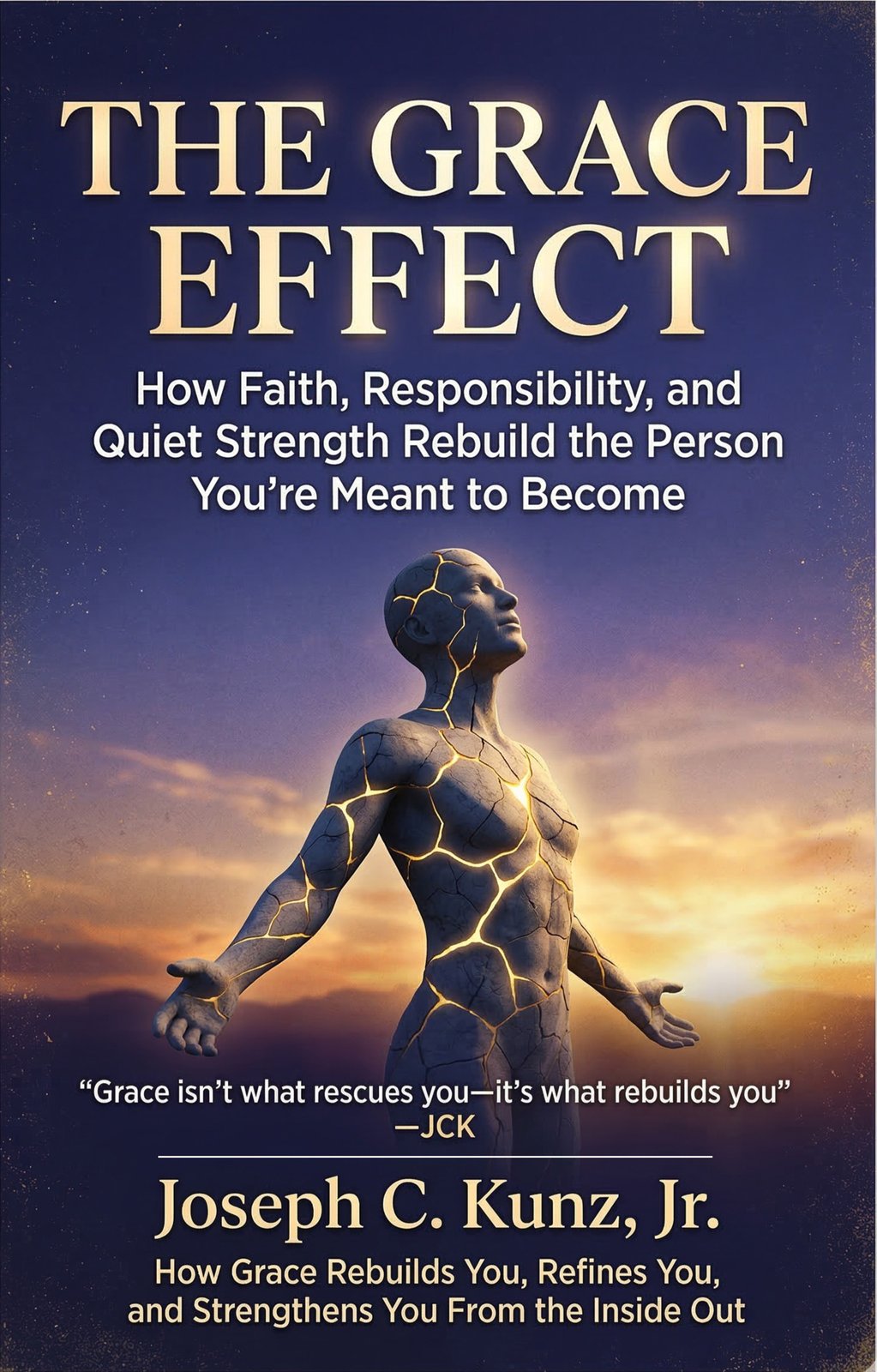
The truth is simple: without faith, conservatism loses its anchor. Families drift. Communities weaken. Politics becomes just another game of power.
That’s why I wrote The Grace Effect.
This book isn’t a lecture. It’s a battle plan—and a reminder. It’s about how faith shapes the choices that actually matter: how we raise our kids, how we build marriages that last, how we protect freedom when culture wants to trade it away for comfort.
I don’t write from theory. I write from a lifetime of building a family, a business, and a legacy alongside my wife.
I’ve seen how faith turns ordinary people into strong leaders, and how grace turns weakness into strength.
That’s what this book delivers: real-world lessons about living with conviction in a world that wants you to cave.
If this essay hit you hard, The Grace Effect will go even deeper.
It will challenge you, encourage you, and remind you that the most important battles are won not in Washington, but at the dinner table, in the workplace, and in the quiet choices you make every single day.
Get The Grace Effect and discover why faith isn’t optional—it’s the compass that keeps everything else on course.
The next move is coming.