A Good Life Is Not a Comfortable One
This essay argues that dopamine can’t sustain a life—only meaning can—and meaning is built through responsibility, discipline, and service, not comfort and consumption. —Joseph C. Kunz, Jr.
Why Meaning, Not Pleasure, Is the Measure of a Life Well Lived
By Joseph C. Kunz, Jr.
Synopsis
This isn’t a soft self-help essay about “being happy,” and it’s not another motivational speech about gratitude and positive thinking. In this essay, Joseph C. Kunz, Jr. argues that the modern world has hijacked the word happiness and reduced it to dopamine: comfort, consumption, entertainment, applause, and the avoidance of pain. That version of happiness is cheap, fragile, and ultimately useless—because it cannot carry the weight of real life: marriage, work, responsibility, aging, suffering, and the long, honest audit of a life.
Kunz reframes happiness as something sturdier: not a mood, but a condition of the soul—built over time through delayed gratification, discipline, and alignment with the good. He explains why a good life may be difficult, why discomfort is often a teacher rather than a warning sign, and why the pursuit of meaning frequently requires self-sacrifice.
The argument turns practical and blunt: people find meaning most acutely by serving another human being—not abstract causes, not crowds, not “humanity,” but a real person who needs your attention, skill, and presence. Alongside service, he insists that intellectual excellence is a moral duty, because sloppy thinking produces sloppy lives—and the quality of your judgment determines the quality of what you build.
The conclusion is simple and unromantic: a thriving life isn’t a painless life. It’s a life that holds under pressure. Real happiness is not what feels good today—it’s what proves good over time.
Dopamine can’t build a life. Meaning can. —JCK
I. Introduction: The Word “Happiness” Has Been Hijacked
We live in a culture obsessed with happiness—and deeply confused about what it is.
Ask most people what they want from life and the answer comes quickly: to be happy. But press a little further and happiness turns out to mean something thin and fragile—feeling good, being comfortable, avoiding stress, chasing small pleasures, and minimizing pain. Happiness, in this modern sense, has become a mood to manage rather than a life to build.
That definition cannot support the weight of a serious life.
Buying something new can make you happy. Being praised can make you happy. A good meal, a vacation, a distraction—all can produce a pleasant feeling. But none of these can answer the deeper question that eventually confronts every adult: Was my life good?
That question is not about comfort. It is about character. It is not about pleasure. It is about meaning.
A good life, properly understood, is not one that feels good most of the time. It is one lived in pursuit of the good—truth, responsibility, excellence, and service. That kind of life may be difficult. It may require sacrifice. It may even involve suffering. But it is the only kind of life that can rightly be called a life well lived.
II. The Pleasure Trap
The modern definition of happiness treats pain as a problem and discomfort as a failure. If something feels hard, we assume something is wrong. If a path demands sacrifice, we look for a shortcut. If responsibility limits our freedom, we treat it as an enemy rather than a teacher.
This mindset trains people to avoid the very experiences that make life meaningful.
Pleasure is not evil. Comfort is not immoral. Enjoyment has its place. But pleasure cannot be the goal of a life without hollowing that life out. Pleasure fades quickly. Comfort dulls ambition. Constant entertainment weakens the soul.
A life organized around feeling good is fragile. It collapses under pressure because it was never built to endure pressure in the first place.
III. The Long View of Happiness
A good life must be evaluated over time, not by the emotional weather of a single afternoon.
There is a difference between happiness as a feeling and happiness as a condition. One comes and goes. The other is built slowly, deliberately, and often at a cost. A life aimed at long-term goodness will frequently require short-term discomfort. It demands delayed gratification, restraint, and the willingness to choose what is right over what is easy.
Modern thinking rebels against this. We are told that self-sacrifice is unhealthy, that obligation is oppressive, and that discipline is restrictive. But that story leaves people unmoored—free to choose anything, yet unsure what is worth choosing.
The result is not freedom. It is drift.
When a person is not oriented toward something higher than comfort, restlessness takes over. People chase one pleasure after another, one distraction after another, hoping the next thing will finally satisfy them. It never does.
Meaning, unlike pleasure, does not evaporate. It deepens with time. It strengthens the soul. It gives effort purpose and suffering context.
IV. Why a Good Life Often Hurts
Here is the truth most people avoid saying plainly: a good life often hurts.
That does not mean it is miserable. It means it is demanding.
Any worthwhile pursuit requires sacrifice. Excellence costs something. Responsibility limits options. Commitment closes doors. Growth strains old habits. Maturity requires letting go of childish impulses.
Pain is not always a sign that something is wrong. Often it is a sign that something is forming.
This applies to every serious area of life—work, marriage, faith, character, leadership. The path toward becoming a better man or woman is not lined with constant affirmation. It is lined with correction, effort, humility, and perseverance.
The mistake modern culture makes is treating discomfort as a defect rather than a teacher. We anesthetize ourselves against difficulty and then wonder why life feels empty.
A life well lived is not painless—but it is purposeful.
V. Meaning Is Personal: Service to One Human Being
One of the most reliable sources of meaning in life is service to another human being.
Not a cause. Not an abstraction. Not a slogan. A person.
I’ve seen this up close in the most ordinary way: one person taking time to help another person get stronger. A conversation after work, a careful correction, a steady hand that says, “Here’s how you do it—now do it again.” That kind of service doesn’t trend, but it builds something real in the other person—and in you.
Serving another person requires attention. It demands patience. It calls for competence. It asks you to place someone else’s good ahead of your own immediate comfort. It pulls you out of self-absorption and into responsibility.
Think of a parent who’s exhausted but gets up anyway—because a child needs breakfast, stability, and a steady voice more than the parent needs comfort. Nobody applauds that moment. But that’s the point: meaning often grows in the hidden places where responsibility overrides impulse.
This is why meaning is rarely found by turning inward. The modern obsession with self-expression and self-care has produced more anxiety, not less. Constant focus on one’s own feelings magnifies every discomfort and shrinks perspective.
Serving another person—teaching, mentoring, caring, building something that benefits someone else—grounds life in reality. It gives weight to your days. It reminds you that your skills, experience, and wisdom matter.
This kind of service does not require grand gestures. It happens quietly: a parent guiding a child, a professional mentoring a younger colleague, a craftsman taking pride in work done well, a neighbor showing up when it matters.
Meaning grows where responsibility is accepted.
VI. Intellectual Excellence Is a Moral Duty
A good life also requires intellectual seriousness.
That does not mean academic credentials or complex theories. It means learning to think clearly, to tell the truth, and to resist shallow thinking. A sloppy mind builds a fragile life. Poor judgment leads to poor choices, and poor choices compound over time.
Intellectual excellence is a moral duty because decisions shape lives. The quality of your thinking determines the quality of your actions. Confusion creates chaos. Clarity creates strength.
In an age of slogans, outrage, and shortcuts, thinking carefully is an act of responsibility. It requires slowing down, asking hard questions, and refusing easy answers. It means being willing to be wrong and disciplined enough to correct course.
This kind of thinking does not make life easier—but it makes it sturdier.
VII. Thriving Is Not the Same as Feeling Good
People often assume that happiness should feel light and effortless. In reality, the deepest form of happiness feels solid. It carries weight. It is the quiet satisfaction of knowing you are living in alignment with what is good, true, and necessary—even when it costs you something.
A life oriented toward meaning can endure hardship without collapsing. It does not need constant stimulation or affirmation. It is anchored.
The same is true in work. A man who shows up on time, does the job right, and makes a product or service better for the next person is practicing a quiet form of love. It doesn’t look glamorous, but it’s the kind of integrity that makes life feel worth living.
When people reach the later chapters of their lives, they do not measure happiness by how entertained they were. They measure it by what they built, whom they served, and whether they lived with integrity.
The question that matters is not, Did I feel good most of the time?
It is, Did my life stand for something worth standing for?
VIII. Conclusion: Build a Life That Holds Under Pressure
A good life is built, not stumbled into.
It requires choosing long-term meaning over short-term pleasure. It requires accepting responsibility instead of avoiding it. It requires embracing difficulty as part of growth rather than a sign of failure. It requires serving others in concrete ways. It requires thinking clearly and living deliberately.
The promise of constant happiness is a lie. But the promise of a life that holds—one marked by purpose, strength, and moral clarity—is real.
A happy life is not one that always feels good.
It is one that is good—whether it feels good or not.
A life that feels easy is often a life that won’t hold. Build one that does. —JCK
Related Essays: For the Reader Who’s Done Chasing “Easy” and Ready to Build Something Real
If this essay sobered you up—in the best way—these two will keep you moving in the right direction.
1. God Doesn’t Want You Comfortable—He Wants You Capable
A faith-grounded gut check that exposes comfort as a counterfeit god—and reframes hardship as the training ground for strength, usefulness, and purpose.
Reader Comment: This one didn’t just inspire me—it corrected me. I realized I’d been praying for ease when I should’ve been training for strength.
2. Stop Wishing for Easy, Start Training for Hard
A builder’s field manual on why confidence is earned through preparation and repetition—not optimism—and why hard seasons don’t ruin you, they forge you.
Quote: Comfort makes you feel safe; training makes you be safe—because capability is the only security that holds. —JCK
Related Book: Stop Renting Your Life to Comfort
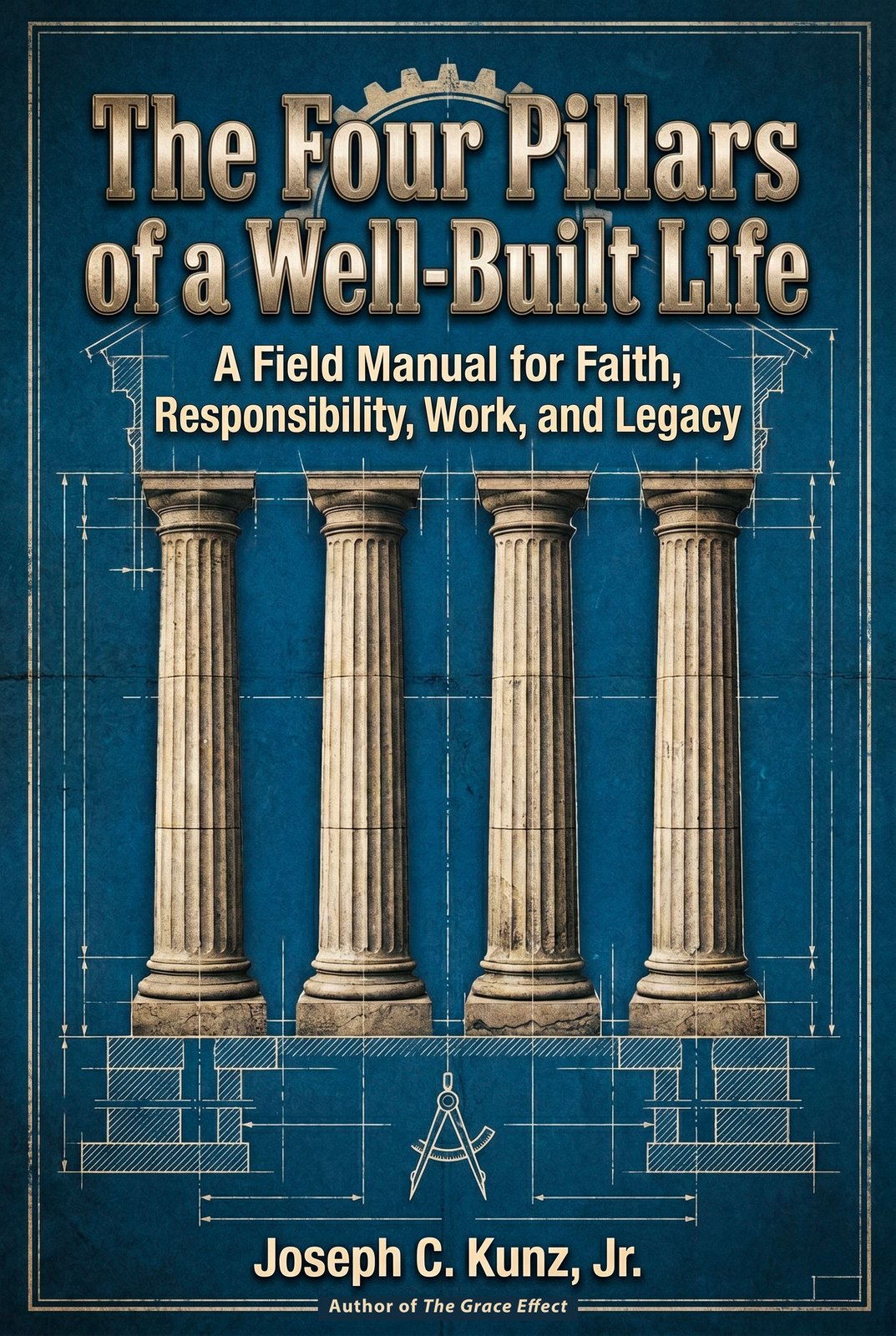
The Four Pillars of a Well-Built Life
If this essay hit you in the gut, good. It was supposed to.
Because the truth is brutal: comfort is the most socially acceptable drug on earth. It doesn’t come in a bottle. It comes in “just this once,” “I deserve it,” “I’m tired,” “life’s short,” and “don’t be so hard on yourself.” And it slowly trades your edge for softness, your calling for convenience, and your future for an endless string of tiny treats.
You don’t need another feel-good quote. You need a backbone.
You already know what’s at stake. You feel it when you’re alone at night and the noise shuts off. You feel it when you realize another year went by and you’re still negotiating with yourself like a politician. You feel it when you catch yourself living for relief instead of purpose.
And here’s the part nobody wants to say out loud: your life is too expensive to waste on “fine.”
The Four Pillars of a Well-Built Life is the blueprint for building a life that can take a hit and stay standing—faith as your foundation, responsibility as your frame, work as your engine, legacy as your destination. Not theory. Not vibes. Architecture.
This is for the ambitious person who’s tired of drifting. For the good man who’s sick of half-commitments. For the woman who’s carrying everyone and knows she needs strength that doesn’t crack. For anyone who’s done mistaking comfort for happiness.
So, here’s the loving punch: stop asking life to be easier—start becoming harder to break.
Go read the blueprint. Build the life you keep telling yourself you want. Coming soon.